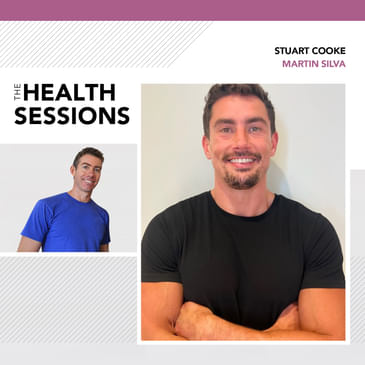
Martin Silva is a good friend and founder of ‘Optimise Your Body'. He’s a dedicated fitness coach with over 20 years of experience helping his clients transform their lives from the inside out.
In this conversation we discuss the diet and fitness protocols that deliver the best results, why fasting could create roadblocks and so much more.
Instagram: https://www.instagram.com/martinsilvafitness
YouTube: https://www.youtube.com/c/MartinSilvaWBFFPro
Podcast: https://open.spotify.com/show/1B4oJAgMQE0j4mIfcBikJN?si=mutIZLQdQyi4kO--kL6UTA
Stuart Cooke (00:01.656)
Hey guys, this is Stu from The Health Sessions and I am delighted to welcome back to the show my good friend Martin Silva. Martin mate, how are you?
Martin Silva (00:09.627)
I'm great, my man, great. Thanks very much for having me on again, man. It's great to catch up again.
Stuart Cooke (00:14.166)
You're looking good and you're very cleanly shaven I noticed today as well. You look dapper, I reckon.
Martin Silva (00:19.177)
I had to have a fresh shave before the podcast man, you know, it'd been two weeks to so I was like, you know, it's been a while since I was lucky enough to be on the I just took five years off, you know, I mean, I've still got the baby face underneath the whiskers. I can't grow a proper proper beard anyway, so I don't know why I bother.
Stuart Cooke (00:22.638)
Okay. was like a single hair growing out somewhere, was it?
Yeah.
Yeah, know, bit tough to know. Well, mate, I really appreciate the efforts you've polished up good again. So you've been on the show a few times. We always like to have a good chat, which is great because we're so well aligned and share, I guess, lots of the basic principles of the pillars of health that we're going to dig into a little bit later on in the conversation. But first up, for all of our listeners that are new to the show, may not be familiar with you or your work or haven't seen you online.
Martin Silva (00:41.321)
Pleasure.
Stuart Cooke (01:02.478)
I'd love it if you just share a little bit about yourself, please.
Martin Silva (01:06.089)
Sure, yeah, so I've been, I'm just like health and fitness is my thing, right? It's part of who I am. It's my identity. I've been PTing people. I started PTing people when I was, back when I was 20, and I'm now 38 coming up. So I've been in the industry for a long time. And as you know now, I coach people online now. So I help people more, to be honest, with the stuff outside of the gym now is the best way to put it. So it's the nutrition and it's the lifestyle stuff. It's changing mindset and just going back to what I said.
helping people upgrade their identity really, because ultimately when it comes to health, fitness and improving your health in general, you have to live like someone, you have to think like someone who's healthy and ultimately that's kind of another conversation. But yeah, that's what I do. But in terms of my journey, I moved to Australia eight years ago and I'm from Wales in the UK just for the audience. So obviously I know you're from England and came over here for a year. The rest is history, the typical Pommy story, you know what mean?
Stuart Cooke (01:57.954)
Yes.
That's right.
Martin Silva (02:03.417)
And yeah, man, this day and age, my lifestyle is, well, from the outside in, it's kind of like, you probably get this, right? Where people think, you know, it's boring. You know, like the way you live is boring or whatever. But for us, it's actually exciting. Like it's a weird thing in it. You get to a point where it's, you feel so good and perform so well most of the time that actually gets, I don't want to say addictive, but it's like the dopamine hit or whatever's going on. We get that from self care and self-discipline now, I think, you know, with people kind of don't really understand. They think we rely on willpower Stu, you know what mean?
Stuart Cooke (02:13.4)
Yeah. no.
Stuart Cooke (02:28.876)
I think so.
I'm not at all. It's funny because I I am 53 now and I do not feel any different to my earlier years like when I was 20. Like I do the same stuff like get on the mountain bike, I can swim and surf and I've just got endless energy and I sleep well. Think clearly. Nothing has changed as yet. Like I'm waiting for the big slap across the face when I kind of wake up and just can't barely get out of bed and struggle with aches and pains and all of the all of the rest but I
Martin Silva (02:32.809)
Yeah.
Stuart Cooke (03:01.334)
I mean, we get one shot, right? And so, and I know that prevention is the cure. So sure, if I bang my head on the wall for 20 years, might be fine for the first 15. But tomorrow, I might have a splitting headache and have done myself some damage. So I want to try and mitigate that by just embracing all of the strategies that make sense, and just enjoying life as best I can at the moment. So
Martin Silva (03:25.385)
Mmm. 100 % man. Same.
Stuart Cooke (03:28.982)
You mentioned nutrition and obviously that's a big one for everybody because there are so many different voices out there proclaiming this is a diet that's going to save your life, cure disease, whatever it may be. And I know like myself, you've probably experimented with lots of different ways of eating, whether it be
full on supplementation, whether it be very plant-based, meat-based, all that kind of stuff. So I'm kind of interested to know, how do you nourish yourself now? And what have you tried in the past that you've now dismissed?
Martin Silva (04:13.235)
So now that's a really good question because the way I look at food now is more going back to what I said, right? It's more about how it makes me feel, know, my behaviors with food as well. I'm really more aware of that now. So when I eat food now, it's yeah, I enjoy the taste of food, but I used to be driven mainly by that, the hedonistic value of food, right? How it tastes. And I think that's the way most of us have been programmed, right? With all the processed foods and everything else. So how I look at nutrition now is more as fuel.
So rather than, I'll give you an example. So I used to eat a lot of, and there's nothing wrong necessarily. I think most people who do well eat and vegetables, I think is a good thing when you cook them right. But I used to eat, I guess less, I used to nourish my body less when I wasn't, but I wasn't necessarily aware of that. So just for the audience, used to do bodybuilding comes back in the day. And I was very much the bodybuilder, restrictive, chicken and broccoli, spinach, and then overeating on the weekends, et cetera.
And it got to a point where I had to hone in on health and focus more on health because I actually started getting issues with my guts. I started feeling off because I was overeating so much on the weekends, overeating the processed foods. And then it forced me to really get more in tune with the other benefits, the other values that food give you, know, such as how you feel, energy levels, blunt in the appetite. I started noticing actually when I start eating more fatty based meats actually, so I was eating more salmon, started bringing in more red meats.
I actually started at the time bringing in more vegetables and that actually kept me more satiated, the fiber. So that's when I started connecting the dots and going, okay, right. And then I started hitting PBs in the gym as well. So because I was eating, fueling my body more, nourishing my body, getting more, not just essential proteins and fats and the contained fats, which are kind of overlooked, I think, I know you guys preach about that a lot, the contained fats that you're gonna get in the grass-fed beef, you're gonna get in the salmon, you're gonna get in the egg yolks.
Stuart Cooke (05:45.89)
Yeah. Yeah.
Martin Silva (06:08.285)
right, because I was conditioned a certain way like a lot of people where it's egg whites. You gotta eat egg white. All this stuff which was just nonsense, right, as a bodybuilder. So you're stripping away lot of the nutrients and just focusing on calories. So I had to kind of unlearn a lot of stuff, long story short. And then I started noticing that my health was better, hitting PBs in the gym, my gut health, I had to really fix my gut from all the overeating on weekends and overeating, kind of restricting and then bingeing basically.
Stuart Cooke (06:13.326)
Yeah, I know.
You
Martin Silva (06:34.249)
And then I fixed that and I thought, wow, now obviously with the connection between the gut and the mental health, wasn't aware of that at the time, but mentally I was much sharper and you can keep going down the list really. So that was kind of, kind of my journey. So now it's more about, it's about fuel. It's about performance. It's about health as opposed to just being, you know, I'll just say how it is. I was obsessed with aesthetics and I'm going to be honest with the audience as well. My girlfriend pulls me up on this from doing so many bodybuilding comps and being so obsessed. used to, think I did like nine comps back in the day. got to the pro level.
You used to wake up in the morning and check your abs. That was a normal thing. You'd wake up for a pee in the morning, early hours, you turn the light on, you're checking your abs. I still check my abs probably about five to 10, well maybe like, I don't know, maybe not that much, about three to five times a day now, right? And it's just like a habit that was conditioned into me. It used to be like 50 times, but now it's all about health, it's all about performance. wanna serve my clients at the best of my ability. I wanna show up at my best in my relationships and stuff. And I wanna perform well in the gym because that's kinda...
If I don't get good sleep, for example, I don't nourish my body with the right whole foods, then I'm gonna get impacted in the gym. And like yourself, that's my therapy, right? So I wanna perform well in the gym, I wanna get good results in terms of the work I'm putting in the gym as well. So I think it's just connecting all those dots, long story short, to the other values of nutrition.
Stuart Cooke (07:49.23)
It's, you mentioned like the abs, so the abdominals, which is kind of a tricky one because sure, they look great. Like they just look great. And you're walking along the beach and you've got a defined set of abs. You exude health. But I guess the reality of that is that in order to proudly display your abs, your body fat has to be very, very lean. And oftentimes, as you probably attest,
if you're in contest level, you're probably further away from health health than you are during maybe your training parts of the year. So what are your thoughts on people getting super, super lean, wanting to chase maybe the six pack abdominals, but ultimately still wanting to achieve long lasting health because I know that like hormones can be affected when you go to lean and then you're cutting down your carbohydrates where we reduction of carbohydrates.
again will have knock-on effects in other areas of health as well. So how do you talk to people, maybe clients of yourself or friends, etc. that are just chasing the aesthetic?
Martin Silva (08:57.801)
Really good question. It's funny because I was just talking to a client before this about the behaviors and habits. So what I find myself doing now, having coached so many people, is about 80 % of the time, we're just focusing on behaviors and habits. Because ultimately, it's not complicated. It's really not. Everyone knows what to do. Most people know what to do, especially now with the information. But it's getting one behavior and turning that into a habit. And ultimately, the abs and the physique and losing fat becomes the byproduct.
Stuart Cooke (09:12.61)
Yeah.
Martin Silva (09:24.275)
So it's only 20 % of the time our clients focusing on that result. Yeah, we're doing the body stats, we're checking the body composition, you know, sometimes, well, actually most clients doing photos, et cetera. But when you really get that foundation of health, so for example, you're chasing abs, you wanna be super lean, you're always gonna end up disappointed. This is I say to people, right? And you can take it from me because I've got, you know, when I was at my unhealthiest, I would say, like you said, when I was super lean, shredded, know, leading up to comps, everyone was congratulating me, Stu, right?
Stuart Cooke (09:53.804)
Yeah.
Martin Silva (09:54.683)
my God, look, you look amazing. So you're getting the egos, getting the hit and everything else. But the reality is I wasn't nowhere near as healthy as I am now because I was at a body fat percentage, which wasn't healthy. And I was more obsessed. My mental health wasn't as good because you're always, especially when you've competed against some of the best physiques in the planet, really, you're always comparing yourself to that. And it's the same thing as most people. They're looking online, social media, and they're comparing.
Stuart Cooke (09:59.15)
course.
Martin Silva (10:20.873)
You know, it's funny when I get people, I'm sure some people in the audience will relate to this. They say, I want to look like this person, right? This is the perfect body for me. And it's like, yeah, it doesn't work like that. That person, if it's real and it's not, you know, all the filters and everything else with AI online, if it's actually a real body, they put years of effort into building that body. It's genetics play a part as well. So all that to say, Stu, when you focus on being healthy, when you focus on eating,
Stuart Cooke (10:28.365)
yet.
Martin Silva (10:47.561)
mainly whole foods. This is the big thing goes back to what we talked about on my podcast. It's the food quality, right? Your relationship really with food says more about your relationship with yourself than anything else because it's emotional eating. Most people, they don't really know what true hunger is. And I was there myself. was there when my brain was hijacked with these processed foods and I was overeating. I was eating maybe 70, 80 % real food.
But then the 20 to 30%, it was ultra processed and I was overeating so much from eating that 30 % that I was actually going backwards and I couldn't keep my abs all year round when I was in that place. So yeah, you wanna focus on the behaviors, the habits, right? What do I need to do to get towards that goal of getting leaner and getting the abs? know, training abs in the gym helps, but unless you strip down the body fat by eating good quality foods, having high protein to blunt your appetite.
Because it is really simple, right? The research now is very simple actually. Having the right amount of protein, the right training stimulus, that's all that matters for building muscle. And when it comes to getting abs and getting leaner, you have to actually, I always say to clients, I try and drill it into their heads. I eat to build. It's a really good thing for your audience to think, right? When you're strength training, I eat to build. When you eat to build, you have to fuel your body, you have to get good sleep, you have to eat good quality foods, otherwise you're not gonna build.
and it's hard building muscle and as you know Stu better than anyone, it's a long process, right? But when you do that, the metabolism speeds up and you can get away with more calories and your body naturally starts burning more calories as you build muscle, because muscle tissue is very expensive, right? It costs your body a lot of calories to keep muscle tissue on your body and the whole pursuit of building muscle. In other words, having high protein. Only around about 30%, sorry, around about 70 % of the calories that you eat from protein are actually...
taken in by the body, the other 30 % is burned whilst digesting it, right? So that's why we get people to focus on number one, focus on the quality of the food you eat in, single ingredient foods. To be honest, I used to say 80%, that doesn't really cut it if I'm gonna be honest. 90 % minimum, like 90 % of your plate, if you look at it this way, needs to be real food, minimum, single ingredient foods, high protein like I said, and minimize the ultra processed foods, because it's not only that they make you overeat. So UPF, ultra processed foods,
Martin Silva (13:07.561)
designed to make us overeat by 500 calories a day. There was a study done actually I think it was in Australia. They got two groups, it was a cross study as well so they crossed the groups over and ultimately long story short they give them unlimited amounts of processed foods versus whole foods and they accounted for the macros and stuff as well and when they crossed them over the same thing happens. It was like 508 calories exactly more a day so that's three and a half thousand calories more a week which is it works out about a pound of fat you would gain a week right.
Stuart Cooke (13:35.01)
Yeah.
Martin Silva (13:35.271)
So it always comes back to that. And not only that, they're allowed to be out. So when you're something which comes out of a packet, like ultra processed foods or anything that comes out of a packet, they were allowed to be out on the label by like 20 % ish by law. So that means they're always gonna put the calories less, which means you're also eating more on top of that, even if you're tracking your food. You know what I mean? So that's it, that's the fundamentals. And then training abs does help when you get lean enough, like to make them more prominent, but that's the bottom of the list.
Stuart Cooke (13:54.179)
Mmm.
Stuart Cooke (14:00.77)
Yeah, interesting. And I guess it's important to note that food is energy, right? And energy, like you, yes, we can consume energy, but energy doesn't disappear. Energy has to be used or stored, right? And ultimately, those extra 500 calories that you said you compound, it's either used or stored. What do you say to the people that say, well, you know what, I'm just gonna, I'm gonna take the stairs to work instead of the lift.
Martin Silva (14:12.873)
Mm-hmm.
Stuart Cooke (14:31.3)
to compensate on that.
Martin Silva (14:33.737)
Such a big one that, you know, people overlook the daily movements. And if you, you look at your total calorie expenditure, about 60%, 70 % even is just to keep the lights on it. Your basal metabolic rates, it's your organs, your brain takes up like 20 % of your body's energy only weighs 2 % of your total mass. So the movement though is like 15%. So you, you exit, so go into the gym and strength training really in terms of calorie outputs.
Stuart Cooke (14:35.095)
Mmm.
Hmm.
Stuart Cooke (14:46.83)
That's it.
Martin Silva (15:01.725)
If you look at it on paper, only a small amount. Like at the time, it's about 5 % of your total, the manual calories you burn day to day when you're awake, know, 5 % of that is going to the gym. 15 % is back to what you said, it's your daily movement. But I think people always try and overcomplicate things with the movement. like, right, I've got to do an extra 30 minute walk and one hour walk, which is great if you can factor that into your day. But like we're doing now, we stood up, right? You've got the stand up desk, looks like you're standing up.
Stuart Cooke (15:14.446)
Hmm.
Stuart Cooke (15:28.438)
I have yet. That's it. Yeah.
Martin Silva (15:29.545)
There we go. Same here, man. So I'm stood up, I'm moving a lot and how I get my steps in is okay, yeah, it's fortunate because I run my own business, work from home. So I walk after my, I have two meals a day generally. I'll walk after both of those meals. That helps me get the steps in, game changing habit, by the way, when it comes to fat loss, going back to the abs and just talking about how you can move more. The research is crazy on that. Like I think you mentioned this actually as well, didn't you? Last time, but the research, like literally 10 minutes, even two minutes they said, but 10 minutes a day, it would pretty much almost reverse that.
type two diabetes, like, epi, that's how powerful it is for blood sugar levels, satiety and all that kind of stuff. Crazy.
Stuart Cooke (16:01.42)
Yes. Absolutely phenomenal. Do you have a target that you just try and hit? I mean, we know that the irony of the 10,000 steps message comes from a marketing slogan created, I think, by the first pedometer. But I guess it's a good metric because 10,000 steps a day. I I track movement now with the ring just to keep a heads on what I'm doing.
Martin Silva (16:16.274)
Yeah.
Stuart Cooke (16:30.54)
have a figure in mind, you recommend a figure in mind to your clients?
Martin Silva (16:35.593)
Yeah, great question. So for myself, I aim for 10K. For clients, I think the key thing is meeting them where they're at. So for me, let's just say 2000 extra calories a day, sorry, extra steps a day they're gonna walk. Really simple, but if I just kind of put a number out there, I would say even 7K, I found that as a sweet spot as a bare minimum, because you look at overall health and longevity, movement is medicine.
Stuart Cooke (16:38.562)
Yeah.
Martin Silva (17:00.765)
and essentially sitting is the new smoking, right? You sit down for like an hour or even two hours, prolonged periods. It literally takes years off your life if you're doing that regular. So going back what we said, stand up desk. Regular movement is the most important thing. The more often you can walk. So I say to clients, when you're checking your emails or when you're like whatever you're doing on your phone, a lot of the times people just sit there and let's be honest, most people scroll as well, move around regular and get used to doing that.
Stuart Cooke (17:08.142)
Yeah.
Martin Silva (17:27.569)
you know, and it doesn't have to be like allocated walks. But would definitely say seven to eight K minimum as a baseline. And if now you're someone who's doing, first of all, track your steps, because some people, don't even know how many steps they're doing. And walk as major can get managed. You track your steps, you realize you're doing 4,000, even if you can add 2,000 on top of that, or an extra 15 to 20 minute walk a day, that is a game changer over time. It's that compound effect.
Stuart Cooke (17:51.116)
It's not hard to do. especially, I mean, I guess from a mindset perspective as well, if the phone rings and you need to take a call, walk and talk, it can change it.
Martin Silva (17:57.873)
Hmm. Hmm. That's the big one. That's the one. I forgot to mention that. That's the big one. 100%.
Stuart Cooke (18:02.796)
Yeah, it's just a game changer. No, it really is. Similarly, then, then my first question was, what have you changed, perhaps dismissed in terms of nutrition? I'd like to ask the same thing for you personally, from a movement perspective. So in the gym, so all of the moves, perhaps, I mean, you've been doing this all of your life. I've been similarly I've been in the gym, probably since I was 16 years old. Love it.
You experiment and you go through phases and ultimately you gravitate to the stuff that always works. Like what is it that you're currently doing to maintain your own physique and health? And what have you ditched?
Martin Silva (18:45.223)
Yeah, so I definitely ditched the bro splits, right? And I'm the same as you. I've been lifting since I was 16. Did you start off with bro splits? Did you start off with like chest one day, arms one day? Just chest day, every day was chest day. All I did was train chest and guns for like two, three years. But that was another thing that I think we go back, let's just go back a decade ago where I started training smart. So even then, you know, I was in my twenties then and I was still in amazing shape because I was training like six days a week.
Stuart Cooke (18:48.055)
Hahaha
Stuart Cooke (18:54.367)
Absolutely right, yes I did. It's chess day.
Martin Silva (19:14.493)
consistently since I was like 17 anyway, right? And good genetics as well. But then when I switched gears, that's when I said earlier I started hitting PBs was when I started training smarter. now I think that, well, I don't think I know the most important thing for actually building muscle and results. Cause I always look at not just with clients, but definitely with clients, but with myself is like, myself is more about health now. I do like to look good for clients. They want to improve their way their body looks. Most of them, right?
So it's how can we elicit the most amount of change, right, for the maximum amount of time? And the key piece here is frequency. So training the body parts at least twice per week, really, which people overlook. And you don't have to do as much volume per session as most people do. In fact, what they find now is any more than five sets per body part is just overkill. So if you go in and you do, let's just say legs even, even just doing four sets of squats.
For most people, that's more than enough. So rather than doing this the way I look at it now, rather than doing, for example, an hour on legs on a Monday, let's just say it's easier to put it this way, 20 minutes Monday, 20 minutes Wednesday, 20 minutes Friday, way better results. That frequency is king to everything, what they find now. You've got to send that muscle building signal often. And this is why I think I mentioned before, I have the little trick I use with clients and myself is just using rubber bands and getting a light pump on the...
to boost energy or even after eating, even better than walking, by the way, it's not an intense session. It's just that you're just getting a pump on and then stopping. I just got to be clear with that. You're not going to do a full on workout, but that's even better than walking because of the insulin sensitivity and obviously blood flow and you know, everything else just getting a pump on with the band, but that sends the signal, right? So there's this, it's crazy how many different things you can do now just to maintain, but you do have to put the work in for it, as you know, yourself, Stu, you know, for a period of time before it's easier to maintain them.
Right, so you can actually do a bit less and less. So that's what I would say to the audience for me now, it's training the body parts at least twice per week. Generally, I'll do full body most of the time. So about 80 % of the time, I'm doing three full body sessions. I'm spending no longer than an hour per session. And the days in between, I'm doing, you know, like literally 10, 15 minutes, I might go to the beach there at Bondi, do a quick like body weight session, and then go for a quick swim. And then I'll do bands on the days in between. But I would definitely say for anyone, right, hit the body parts at least twice per week.
Stuart Cooke (21:22.701)
Okay.
Martin Silva (21:36.969)
If you only do it once per week, then you wanna train to failure. If you're hitting the body part, say two to three times per week, then stop one to three reps shy of failure. That's another big one, Stu. I used to train to failure all the time. Most people do this. Don't do it. Most people are gonna get way better benefit from stopping one to three reps, I wanna say short of losing perfect form rather than failure. So you feel like you've got one, two, maybe even three good reps left, stop. You'll get better results.
Stuart Cooke (22:02.732)
Okay. And what about recovery between sets? How long?
Martin Silva (22:08.017)
are so people need more. So the thing is, it's time you spend in the gym as well, right? I don't like people to spend too long, but generally if you do in less say six to eight rep range or even eight to 12 rep range, give yourself like a bare minimum of a minute, you know, up to two, even three minutes. If you lift in heavy, if you're doing like, you know, six reps or less, even three to five minutes. But the thing is the time you spend in the gym then, right? So even for me, I don't like to spend longer than an hour. And I think for a lot of people, they spend longer than that. It's a bit of overkill. You know what mean?
Stuart Cooke (22:37.298)
Yeah, yeah, it's it. It's interesting, because I generally give myself about a minute or so and there are a few occasions where you know everybody in the gym and they come over and have a chat. Sometimes you get caught up chatting for a little bit longer, you know, you look up 10 minutes has gone you get back on the machine and you feel like, wow, I've got all this power again, where's this come from? So the recovery just so so you're three full body workouts a week for you personally at the moment.
Martin Silva (22:38.397)
But take adequate rest, definitely.
Martin Silva (22:57.737)
100 % Definitely
Martin Silva (23:06.811)
Yes, but literally yesterday I just started doing more of a split. So I wanted to switch it up. So when I do that, this is another thing on the frequency, legs one day, very simple. Maybe I'll throw some abs in there, upper body. And then it'll be four sessions basically. So was literally legs, maybe let's say legs and abs, upper body. So Monday, legs and abs. Tuesday will be upper body. Wednesday could be a sauna or whatever, maybe a pump with the bands or whatever. Thursday and Friday, same thing, done.
Stuart Cooke (23:13.582)
Yeah.
Martin Silva (23:33.607)
So it's hitting every body part twice, but it's not, you know, hammering every body part. So you're doing like loads of sets per session. That doesn't work. And you get, this is the recovery thing, Stu, is the, I'm glad you asked this because most people, they're either not consistent enough with training, right? Which is the main one. Consistency beats everything. Forget about, can have the worst program in the world. If you're consistent with it, you're to get better results at the best program in the world, done inconsistently. But the other thing then is just being stuck in the recovery trap. People do too much.
Stuart Cooke (23:33.613)
Okay.
Martin Silva (23:59.465)
And they just, the body can only adapt to the stimulus or recover, you know? That's what the body's always doing. So a good way to put it, if you're aching for longer than a day or two, you've crossed the line and you've done too much most of the time. Yeah.
Stuart Cooke (24:03.544)
Mm-hmm.
Stuart Cooke (24:10.636)
Yeah, too much. Okay. If you were to choose a handful of exercises, movements that you always include during your week of programming, what would they be?
Martin Silva (24:25.171)
So squats definitely barbell squat. I'd say number one is deadlifts for me, you know, cause the posterior chain benefits. But look, if I could choose two exercises to do for the rest of my life, it would be barbell squats and overhead press. Cause you're covering everything then overhead press covers all the basically the posterior chain, not the glute, but, you know, core as well. If you're doing it standing up, the overhead movement there, locking the arms out. That's a movement we never do. If you don't use it, you lose it.
Stuart Cooke (24:29.772)
Right. Yeah.
Stuart Cooke (24:38.658)
Okay.
Martin Silva (24:51.303)
And that's you see like a lot of older people, know, major hunchback. There's, know, there's loads of other stuff, but it's mainly because they're not doing these fundamental movements. and I would, I would choose squats for sure, because literally working every single muscle group, but the every single week I'm doing the squats, the deadlifts, I'm doing a row of some sorts. I would recommend either a bent over row with a barbell, although it's most more technical for most, or even a cable row is great. Cause that really hits the posterior chain.
and then the overhead press, like I say, a shoulder press just for everyone else. I would say if I had to choose, they're really the big four and then we can go down to, you know, bench press is you can actually, if you want to develop your chest, obviously you want to be doing bench press, but for most people that already, they've already got, they've already got tight, you know, anti-viralto is they're already rounded shoulders and that kind of cements that in more. mean, it's a great movement though. I would add that in the top five, but that's at the bottom of the list in terms of functional strength and all those kinds of things, you know,
Stuart Cooke (25:20.878)
Yeah.
Stuart Cooke (25:46.582)
Yeah. Interesting. Yeah, very interesting. And do you ascribe to any of the more functional movements that are becoming more popular in the let's say the like crossfit community, sled, farmers carriers, things like that? Do you do you get out the outside and do that kind of stuff as well?
Martin Silva (26:08.681)
You know what, I need to do more farmer's carries. And we said this last time, but that's one of the most underrated exercises, in the walk. And going back to longevity and functional strength, right, that's one of the number one indicators of how long you live, right, is your grip strength. And that's a great way to benchmark that,
Stuart Cooke (26:13.196)
Yeah, yeah, that's it.
Stuart Cooke (26:20.268)
Yeah, exactly.
Yeah, totally. I've been experimenting just throwing in a couple of those and it is amazing. Like just to walk as I mean, I we have to 32 kg kettlebells. I mean, so that's as much as I can get there and just walk up and down the track four times, literally to the point of dropping those things. And when that when you release them, you just feel like you could float away. You feel as light as a feather. But you can just feel like that's that's not an isolated movement. It's worked everything.
Martin Silva (26:46.473)
100%.
Martin Silva (26:54.025)
100%. I'm definitely, I'm going to add that in now to my, to my program. I stopped doing it. And you know, as a side effect as well, when it comes to muscle gain, did you notice with traps and back and stuff, especially for traps, just as a side effect, you just develop small muscle as well. But yeah, farmers walk and sled as well. It's a great movement because it's a, it's one of them. I'd say it's towards the top. Obviously you've got squats, deadlift, lunges. It's at the top for leg development as well, pushing the sled in particular as a by-product for building muscle. But when it comes to conditioning as well, you know, obviously fitness.
Stuart Cooke (26:54.19)
And
Yeah.
Stuart Cooke (27:02.476)
Yeah. Yeah.
Stuart Cooke (27:17.411)
Mm.
Martin Silva (27:23.057)
it kind of, you hit two birds with one stone with that as well. So definitely rate those two, but if we're talking about CrossFit and we're talking about all the, you know, like the kick pull-ups and all this stuff, there's a lot of stuff I just massively disagree with. And it's just, you're just setting yourself up for an injury, you know, a lot of the stuff, but there's a lot of value, I think, that come out of CrossFit as well. Like women lifting heavy weights. I don't know if you noticed that, right? But that was a kickstart for women lifting hard and heavy. Like CrossFit played a part in that, so.
Stuart Cooke (27:30.014)
yeah, true.
Stuart Cooke (27:42.798)
Mmm.
Strong is the new skinny, I think was the phrase that came out of that era. yeah, I really enjoy all that functional stuff as well, because I remember about three years ago, before I'd even considered a sled, I had to help somebody at the beach push start his car. He was wanting to bump start it. it battery was flat. And I said, yeah, no problems at all. I go to the gym, been doing that for long time.
Martin Silva (27:51.219)
Definitely.
Martin Silva (28:12.393)
Hahaha!
Stuart Cooke (28:14.328)
push this thing down the road. But the next day, I just thought, what have I done? Like every part of me just feels like I've just been through a war. It just ached. could barely barely walk. And I thought, you know, it's just I'm doing too much aesthetic stuff. Like, yeah, it's great. Look at your guns and you've got six pack, but you can't push a car. Like it functional, right? If you need to be able to get out of a burning building, you want to maybe, you know, jump up and pull yourself out and all of that.
Martin Silva (28:25.821)
Hahaha
Martin Silva (28:36.57)
Exactly.
Stuart Cooke (28:43.904)
functional stuff. So I love the fact that strength plays into functional training, which then plays into, I guess, being more resilient in everyday life. I can carry my shopping bags, I can push a car, I can pull myself out of a window if I need to.
Martin Silva (28:59.005)
Definitely.
Yeah, and self-worth, right? They've done research on that. Basically, when you get physically stronger, it actually improves your self-esteem and self-worth. But with functional strength, I've got to touch on this, right? So the way I look at it with most clients is single-leg movements, right? So whether you're looking for longevity strength, just what Stu was saying, one leg, you want to be good at doing stuff, unilateral stuff, where you're doing one leg at a time. Step-ups is a great movement. On the bench, one foot up on there. Obviously, be careful if you've got any issues with your joints. Don't try this, right? If you've got any issues.
Stuart Cooke (29:26.188)
Yeah.
Martin Silva (29:31.785)
That is something that I get all my clients doing is something that I actually need to do more of as well, but doing a single leg movement. actually, because when you look at squats with a bar on your back, I go and see, I coach people in person for like 12 years and eight to nine out of 10 people, just can't squat with good form. It takes a lot of work. It brings out all the discrepancies. So most people, again, 90 % of people need to start off doing like a goblet squat or even just forget about that, practicing body weight squats, working on mobility.
Stuart Cooke (29:44.248)
Mm.
Martin Silva (30:01.405)
but even better for strength and even muscle development is most people don't do the single leg stuff. Let's be honest, right? How many people hate Bulgarian split squats, right?
Stuart Cooke (30:09.784)
crikey yeah. But boy are they effective right? Yeah it's a dirty word.
Martin Silva (30:16.399)
It is, is people hate it, but that's very technical Bulgarian split squats. And I think that's like, most people shouldn't start there, but the step ups balance, you need to be strong on one leg. I think about as you age and stuff, I think they did a research on that as well, but just in terms of being able to balance strength on one leg is like one of the main, you know, things that determine longevity and your resilience as you grow older. Like if you've got the ability to have a fall or you end up, you know, with with the illness, you're going to have as much muscle on your body as possible and strength, you know.
Stuart Cooke (30:22.925)
Mm.
Mmm.
Stuart Cooke (30:32.205)
Yes.
Stuart Cooke (30:42.806)
Yeah, absolutely right. During COVID, I ordered some steps. So I got the three steps, put them outside in the backyard and I've got variety of different dumbbells. And I was just doing step up, steps down with like 15, 20 kilo dumbbells in each hand. And boy, boy, fantastic workout. Like you feel it in the glutes, you feel it in the legs. And you realize that...
As you mentioned, it's not all about strength, it's about stability. How do these little stabilizing muscles actually hold up if you don't use them? And it can be so important.
Martin Silva (31:13.641)
Mmm.
Martin Silva (31:20.101)
definitely. Yeah, step ups and also I just want one more exercise, reverse lunge. Not sure if you've ever done reverse lunge. It's one of the... Yeah, you did it yesterday, You feel it, like you say about glutes, you can actually feel the glute activate, you, when you step back as well.
Stuart Cooke (31:25.681)
yes, yeah, I actually did, yeah, I did that yesterday. did that just yesterday, yeah, reverse that.
You can, you can. So how do you talk? You just mentioned you can feel the glute activating. How do you talk to that with your clients then? Because many of these exercises, if not done correctly, don't target the muscle that you really want to. There is a mind and muscle connection and how do you talk to that to get your clients to do the right thing? Because there are so many nuances in lifting.
Martin Silva (31:51.017)
Absolutely.
Martin Silva (32:02.587)
Yeah, absolutely. when I was obviously that's the benefit of coaching people in person, right? And that's the benefit you'll get from having a, if you don't know what you're doing and you don't know the fundamental movements, particularly deadlifts, for example, right? There's no room for error. That's the highest risk exercise. That first six inches from the ground with a bar, for example, that's when you're exposed, man. One bad rep and you're in real big trouble, you know? So you want to learn how to master those movements and using like a trap bar, for example.
Stuart Cooke (32:13.838)
Mm.
Stuart Cooke (32:17.614)
Yeah.
Stuart Cooke (32:21.134)
Cool.
Stuart Cooke (32:29.88)
Mm-hmm.
Martin Silva (32:30.067)
when I would get clients to learn how to deadlift, firstly, I would get them just practicing the hip hinge movement, you know, even just with like, it could even be with, you know, no weight, or we're getting practice with no weights, or even just a stick on their back. So they're doing like a good morning, for example, with just a stick on their back. So they're getting used to that hip hinge movement where they're tilting from the hips. A lot of people struggle with that. So it's getting used to that, building up with deadlifts. But yeah, with clients, a lot of them have my prerequisite online, obviously,
Stuart Cooke (32:34.808)
Mm-hmm.
Stuart Cooke (32:43.81)
Yes. Yeah.
Martin Silva (32:57.063)
I have all my own videos and everything else and I get them to send me videos and blah, But they need to have at least, you know, like a year's experience with, with strength training. And sometimes it's even better to be honest, once you've had like an in-person trainer in the past, cause they're more connected than that. A good trainer, of course they're more connected with their body and stuff. So yeah, it's that mind muscle connection and it's just doing the movement right. I'm practicing. And that's, that's what I, I like to communicate to people is.
people go into the gym to work out, you know, I'm going to go in there and I'm going to sweat. And it's less about that. It's more about just going to practice the movement. It's like anything you really practice, you get better at. the problem is it's almost like people are kind of in accident emergency mode, right? When they go to the gym, like rushing around the gym, you see everyone doing quick reps. I mean, look around the gym. You never see anyone doing slow reps. It's very rare you anyone doing the slow reps. That's the most underrated thing. And you know, I always communicate that to clients. That's
Stuart Cooke (33:32.322)
Mm. Mm.
Stuart Cooke (33:41.206)
Yeah, get in, get out. Yeah.
Stuart Cooke (33:46.583)
Nah.
Martin Silva (33:53.071)
When it comes to progressive overload to build muscle, that's what you need to build muscle, you need to add reps, most people know that. But actually, mechanical tension is the most important thing when it comes to building muscle and time. Yeah.
Stuart Cooke (34:01.804)
Yeah, at time. That's it at time. Yeah, it's it's it's amazing. I went we mentioned last time we spoke I did some German volume stuff and really slowed it down. And boy, boy. I mean, I felt Yeah, it was it was brutal. And I literally halved the weights that I was lifting. And I would say I got double the results. So literally, huh? Yeah.
Martin Silva (34:15.657)
Brutal.
Martin Silva (34:27.283)
That's it. Mate, you hit the nail on the head. You hit the nail like, that's what I say to clients is that the first phase I get most people doing is, we're going to slow the reps down. And like you said, man, the results they get, it's great because it's very easy to do. it's like even sometimes, you know, cause it takes longer to do the workouts as well. got to bear that in mind. So I'll even say the last three reps on every set, slow them right down. So you're doing like a, like I did a three or four second negative portion of the rep. So it's that, lower in portion of each rep where you really get most of the results.
Stuart Cooke (34:33.772)
Yeah.
Stuart Cooke (34:45.496)
Yeah.
flow it down here.
Yeah.
Stuart Cooke (34:56.75)
Hmm, makes perfect sense. Also one little tip, because we had a guy in the gym who was fully into exactly all the stuff that you were talking about. He corrected my, so I was just doing a seated row and he corrected the movement of my seated row. So instead of pulling into my stomach, I was pulling into my groin and immediately I felt my lats just switch on.
Martin Silva (34:57.363)
So simple as that,
Martin Silva (35:20.883)
Mmm.
Martin Silva (35:24.253)
Mmm
Stuart Cooke (35:24.364)
And I was like, my God, I have been doing these all of my life. And for the, I feel like it's the first time I've ever done them. It just immediately switched on my traps, not my traps, my laps. Yeah. And I just like, and that was just that, it's probably 15 degrees shifting coming down. And I can, mean, I'm pulling that now as a movement and I can feel them. And it just made so much sense. See, I love the nuance of just tinkering.
Martin Silva (35:32.488)
Wow.
Martin Silva (35:35.881)
The mid lower traps, the posture muscles in the back and the lats.
Martin Silva (35:49.641)
100%.
Stuart Cooke (35:54.09)
And I think you can do that more if you slow things down and you reduce the weight because you're at less risk of pulling something or perhaps just struggling on this weight that really isn't giving you the stimulus that you need because of your form and timing and all of the above.
Martin Silva (36:09.597)
Definitely man. And that's one of the hardest ones to get people to connect to as well. That's a good cue that one because that, think about that. Cause you don't activate those muscles. They're always switched off for the most part. So, but, but I was going to say on that as well. I should just put my thumb. That's a good thing again about having, you know, someone in person put my thumb in between their shoulder blades, just at the bottom of the shoulder blades on their back. Yeah. And this squeeze it in there. But then when you do it on your own, you want some simple cues like that.
Stuart Cooke (36:13.452)
Yeah.
Stuart Cooke (36:17.686)
No, that's right.
Stuart Cooke (36:25.324)
Yeah, and squeeze the thumb. That's it.
Yeah, you feel it. I love it. I love all that stuff. fueling yourself for workout. is it as simple as if you're to gain muscle, calorie surplus, progressive overload? Could it be that simple?
Martin Silva (36:50.601)
No, do you know what? It's actually, I love to say it is, and the old me probably would have said, yes, that's simple. Actually, it's not. It's actually more nuanced than that. So, but it is also very simple in a sense where it depends on how lean you are as well, right? So if it's someone who's relatively lean, let's say for a guy you're between, you know, 12 to let's say 16 % or if you're lower, then yeah, that's really lean, right? Then generally in that case, you you're gonna need to get into a surplus. You're gonna need to be in a surplus of calories by
Stuart Cooke (36:55.756)
Yeah. Yeah.
Martin Silva (37:19.251)
about five to say even 10 % above your maintenance calories. But really, you know, a lot of people who've got more body fat and again, genetics play a part in that as well. Just having enough protein is, is it works, you know, having enough protein and the right training stimulus. So that's why that training piece people overlook that it's very nuanced and recovery and all the stuff we talked about, right? The frequency.
Stuart Cooke (37:29.762)
Yeah. OK.
Stuart Cooke (37:41.292)
Yeah.
Martin Silva (37:42.023)
You know, are you progressively over the body, all those kind of things. So, but yeah, I would say just to, know, so people don't get confused. For most people you want to create a little bit of a calorie surplus, but it doesn't have to be big. If you send the right signal, you're having high protein, the right training stimulus, you're gonna build muscle. And it also then depends on how much experience you have with lifting weights, right? If someone is more experienced, they're gonna need to throw a bit more of a curve ball to build muscle. And if they're relatively lean, like I say, they're gonna need to be...
in a decent surplus, you know what I mean? yeah, you hit high protein, you get the right training stimulus, the results are gonna come.
Stuart Cooke (38:12.012)
Okay.
Stuart Cooke (38:17.058)
Now in terms of the right training stimulus, if you have a program that works, how important is it in your mind to mix it up in terms of, know what, Martin Silver's given me this program, I'm gonna do it for the next three years. Follow it religiously.
Martin Silva (38:31.119)
Hahaha!
Yeah, that's the thing. Yeah, that's going back to the adaptation. So the way I do it is I like people to measure their progress. So the problem is it still works just the same, to be honest, if you were to do in a week, you know, one day where you lift really heavy, one day you do slow reps, the other day you do loads of reps, you know, I mean, three different types of training, you can still get equally as good results pretty much dependent on a few other factors. You don't, can't measure it. So
Stuart Cooke (38:38.211)
Yeah.
Stuart Cooke (38:53.526)
Okay. Yeah.
Stuart Cooke (38:59.167)
Mm. Right.
Martin Silva (39:02.249)
Really about four weeks I've found as a sweet spot for any given training phase. So generally the programs I create training programs, there'll be about 12 weeks long. And I cover each of the three different training stimuluses in those three phases. So you've got the lower reps, heavy weights for strength, and that builds muscle one way. Then you've got the slow reps we were talking about, which could be anything from six to 10 reps, where it's slower reps, time and attention training. And then you've got like the 12 to 25 rep range, right? Where you're not going quite as slow with the reps.
Stuart Cooke (39:07.138)
Right.
Martin Silva (39:32.105)
do a more reps, it's more pump adaptation, more of a pump adaptation. So after four weeks, they'll go back to your point, you'll generally get diminishing returns. you know, six weeks, you know, six weeks works generally a lot of the times, but after you've got to about that four week mark of any given training stimulus, you know, generally the results could be diminishing, because the body adapts too much then, and hits that plateau, you know.
Stuart Cooke (39:43.928)
Yeah. Yeah.
Stuart Cooke (39:52.11)
Interesting. Yeah, I gave the German volume about two months and just got sick of it. I can't do this anymore. gee.
Martin Silva (39:58.441)
But you deserve a medal for doing that for two months, man. But that's a testament on a serious note though, you you're in your fifties to be able to deal with that kind of stress on the body for two months. No, that's a testament to your health though, to like, you know, cause that's serious. That's not a joke. That's just for the audience, right? You were doing like five sets of 10, weren't you? Yeah, yeah, yeah. That's a lot, man. That's a lot of audience.
Stuart Cooke (40:06.659)
Yeah.
Stuart Cooke (40:12.814)
Yeah. Yeah.
I was Yeah, yeah. Yeah, super, super, super slow as well. I was like, Oh, yeah, I've got, I gotta get out here. It's taking too long. But no, was good. It was good. And so in terms of nutrition, if you're training, so what you're so I don't know when you Monday, Wednesday, Friday, so let's pick a Monday and it's one of your training days, just walk us through how you would eat on that day, because I know that, you know, whole heap
Martin Silva (40:27.62)
Hahaha!
Stuart Cooke (40:48.322)
people will jump onto your site and have a look and go, all right, this guy looks pretty cut. Like I want to, I want to be him, look like him. So I'm going to emulate how you eat. So what do you do on a training day? Perhaps from the point you get up to the moment you go to bed.
Martin Silva (41:02.525)
Yeah. The funny thing is the way I do it is what I wouldn't recommend to most clients. You know what mean? So like we talked about this last time, I know I would benefit more, maybe a little bit from building muscle, but that's kind of splitting hairs just in general, I think with my health, I think by having an extra meal. But to give you an example today, I trained this morning and I just had my black coffee basically, right? So that's, know a great, great for recovery. But again, for me, because I've lifted for so long now,
Stuart Cooke (41:05.485)
okay. Yeah.
Stuart Cooke (41:11.246)
Yeah.
Stuart Cooke (41:14.766)
Yeah.
Stuart Cooke (41:22.062)
Mm.
wow.
Martin Silva (41:31.581)
You know, could it, can I build muscle by, know, not eating for like three to four hours after training? Yeah, I could. It's harder though, because going back to what I said earlier, I'm lean, so I would need to be in a surplus. So it's kind of harder to get the calories into two meals. So that's, let give you an example. I trained today. I train fasted in the morning. So I'll, you know, I have a decent sized meal the night before and I'll load up on the carbs the night before train safe 7am. And then generally I will have my coffee and I won't really eat until about.
you know, 11 or 12. And that's not ideal for building muscle. If someone wants to build muscle, and also for recovery as well. So they found like a study recently, having carbs, like as soon after training as possible, is actually better for recovery the next day. 30 % increase in performance the next day with training by having carbs as soon as possible after training. Even waiting three hours after, drop the performance the next day by 30%, which is interesting.
So that's one for the, that's one for the bros as well, right? Cause all the, I remember all the bodybuilders back in the day, they'd been saying that for years and I used to do it. So those kinds of things are fine tuning, but yeah, so I'll have my literally like 11 or midday. Sometimes to be honest, I'll have dark chocolate with my coffee in the morning, right? Break my fast with that. You know what mean? Like 90, 95%. Don't recommend that to the audience necessarily. And then I'll have lunchtime meal. I'll have, you know, a big meal for lunch where it's mainly kind of meat, eggs. I've been throwing in some carbohydrates now, maybe a little bit of white rice, but.
Stuart Cooke (42:29.398)
Yeah, mixes it up,
Martin Silva (42:54.377)
most of the time I would say it's meat, eggs, avocado, cooked in ghee oil. And then in the evening is when I load up my carbs then generally. I have my white rice in the evening and then I'll sometimes have some fruit as well and maybe some Greek yogurt as well in the evening with, you know, after my meal. But I have a small amount of meat in the evening and a bigger amount lunchtime. But again, for most people, if you wanted to build muscle, I would say to have more regular meals, you know, three meals a day and just for health as well. I think most people, they're not gonna do good. Like I've been hungry in the past, right?
Stuart Cooke (43:22.264)
Yeah.
Martin Silva (43:22.481)
And also I just eat when I'm hungry. That's kind of what I do now, but I feel I would be hungrier. think my body would, it would get me more in tune with the natural signals if I had an extra meal straight after training and I'll probably build more muscle.
Stuart Cooke (43:25.067)
Yeah, sure.
Stuart Cooke (43:33.87)
So talk to my point at the morning. So in the morning, so I train in the morning. So typically at 7.30 till about 8.30. But I'll have the mother of all breakfast before I go. Because I just get up with such an appetite. I'm a raging appetite. I have to eat and I'll have a big, big, big meal, like lots of protein, lots of carbohydrates, lots of fiber and fats. And then I'll have a smoothie after that as well. And then I go to the gym.
Martin Silva (43:41.971)
Yep.
Martin Silva (43:45.875)
Mm-hmm.
Martin Silva (43:59.049)
Before or before training?
Stuart Cooke (44:01.23)
before training and then when I've finished training, I'll have a piece of fruit like an apple or a banana.
pros and cons to that because people say, you know, have to eat after your training, but I kind of say, well, look, I'm just digesting that food. So it's already in there and it's getting ready to be absorbed and digested and utilized because I've just had it.
Martin Silva (44:13.747)
Hmm.
Martin Silva (44:21.864)
100%. and the good thing is you're a shake, right? So you're utilizing that within 30 minutes. You're actually still using up the glycogen. You're getting that into the system as well. And for someone like yourself, again, there's so much nuance from person to person, but you're a hard gainer, right? I would say that's perfect for a hard gainer. And if I'm trying to build muscle, if I was like, I am on it, which I'm not, if I was on a project to build muscle, I'm definitely having that breakfast to get an extra meal in. also, there is research on this. I would have said this is kind of...
Stuart Cooke (44:26.775)
Yeah.
Stuart Cooke (44:30.722)
Yeah. Yeah.
Stuart Cooke (44:34.828)
Hmm. yeah.
Stuart Cooke (44:39.714)
Yeah. Yeah.
Martin Silva (44:49.705)
It is kind of split in here for most people because most people don't have enough protein. If you don't have enough protein, you're not in ideally a little bit of a calorie surplus. Like we said, for most people, you know, generally you're not going to build muscle and you haven't got the right training stimulus, but that muscle protein synthesis, so having protein after training, you know, does increase muscle. Like they say about, you know, 20 to 40 grams generally after training, as soon as you can after can help as well a little bit with that muscle building signal. But I don't think that's the important piece, but for yourself, I would say great. That's perfect because then
Stuart Cooke (45:08.194)
Yeah, yeah.
Stuart Cooke (45:16.888)
Yeah. Good stuff.
Martin Silva (45:18.375)
You're planishing straight after and for you, you're leaner, right man? You're super lean as well. So your body just soaks it up. You know what I You're really metabolically, you know, it's like a metabolic sink, right? As well, when you have muscle on your body on top of that, your body just soaks it up. You know I mean? If you feel good training, fantastic. But I know I wouldn't, I don't feel good though. If if I be in that kind of meal, I don't feel good training personally.
Stuart Cooke (45:22.176)
I am. It does, yeah, it's like a sponge.
Stuart Cooke (45:34.018)
Yeah, totally.
Stuart Cooke (45:38.166)
no, I love it. Yeah, I'm ready to go. That's excellent. Mate, we are coming up on time. So I'm keen to know what you've got in the pipeline for the rest of the year. Like what's next for Modern Silver for the next six months?
Martin Silva (45:55.045)
Also for the next six months, my, I guess my project, what I want to do now is, get on, you know, more podcasts, have more of these conversations and really building the podcast as well. And the YouTube and stuff of getting lots of really good kind of feedback on that as well from I've been putting out a lot more solo episodes and having some guests on like yourself. So that's a big project of mine in terms of, you know, what I do a day to day. And then, yeah. So obviously that's pretty much the main focus for the rest of the year.
Stuart Cooke (46:00.962)
Mm-hmm.
Martin Silva (46:23.443)
With my program, obviously I have a one-to-one program. So the goal is now just to kind of cap that off with the next few clients I get and then build like a one-to-many program then where it's a community-based service. And basically they get all the same kind of similar resources while they get with clients and everything else and similar support, but just in a community setting. So that's kind of the next project, business and value and stuff like that, adding value. But also I think I mentioned to you as well in my personal life, we're looking to get married in November in Brazil.
Stuart Cooke (46:52.248)
So on that note, obviously for many people, they want to be in the best shape of their life, for their wedding. Are you changing anything leading up to your wedding?
Martin Silva (47:02.124)
Yeah, 100%. Oh, not for me, you mean, personally? Yeah. Oh, for me, man. Do know what? That's a good point. I haven't thought about that, but I probably will actually. It'll be summertime in Brazil. So I'll probably do like a month before. I've tried to get a bit leaner, right? Just for those, you know, the shirtless photos. So 100%, I'll do like, I'll probably do, I'll probably do a month before where I'm more mindful. I might even track my food for like, you know, two to four weeks before that.
Stuart Cooke (47:06.242)
Yeah, for you.
Stuart Cooke (47:14.274)
Yeah, yeah, that's right. Exactly right.
Martin Silva (47:26.845)
That's another thing for the audience as well, if you want to get leaner, being aware of the calories you're eating, you're gonna generally eat about 20 % less just doing that. So I might do that, I might tighten things up a month before, but other than that, that's about it, man.
Stuart Cooke (47:36.248)
Yeah. Fantastic, fantastic. So for all of our listeners that want to find out more about you, check out your programs and all of the resources that you've spoken about today. Where can we send them?
Martin Silva (47:50.153)
So yeah, though, basically, first of all, the YouTube is where I'm posting most of my content now and the podcast to post the same content pretty much. So it's Martin Silver Fitness. Just type that in on YouTube, subscribe to my channel there definitely. And then yeah, the podcast is called Optimize Your Body, but it's Martin Silver Fitness is my channel on YouTube. Optimize Your Body is called on all platforms, basically Spotify, you name it. So go follow that as well on Spotify or the iTunes or whatever. And yeah, website is just optimizeyourbody.com.
And my main kind of social media platform, if you like, with the short form content is Instagram. So definitely go follow me on there at MartinSilverFitness. And yeah, that's pretty much it really in terms of like coaching. If anyone is interested in coaching, can essentially just the best way to do it is send me a direct message really on Instagram. Like I said earlier, I can't help everyone, but if I can help you, either way I'm happy to help. So drop me a DM on there at MartinSilverFitness. It's kind of the best way to go about that or just fill out the coaching inquiry form on my on my website.
Stuart Cooke (48:49.294)
Fantastic. We will add all of those links to the show notes and Martin as always great conversation and love chatting to you always have a good time.
Martin Silva (48:58.439)
Hey, always enjoy it, man. We do it more often than that. I spoke to Giannini about Bayern as well, so we're hoping to come up there before November as well. So it'd be great to catch him in person. Will do, man. I'll make it happen. Thanks, mate. Bye-bye.
Stuart Cooke (49:00.93)
We do.
Stuart Cooke (49:05.58)
Make sure you do, make sure you do. Fantastic, thank you, mate. Take care, bye bye.