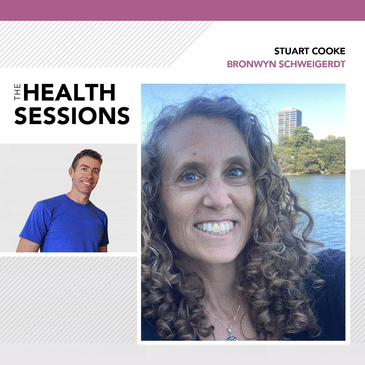
This week I'm excited to welcome Bronwyn Schweigerdt to the podcast. Bronwyn is a psychotherapist with a master's degree in counseling and nutrition. She's commonly referred to as an evocative psychotherapist who helps people reconnect to their anger and heal their relationship with themselves. In this episode, we discuss the traits that may point to an underlying anger issue, the telltale signs that we aren't processing emotions in a healthy way, and strategies to resolve internal issues.
Some questions asked during this episode:-
What is an evocative psychotherapist?
-
How does conventional anger management differ from your approach?
-
How might we know that we aren't processing our emotions in a healthy way?
This week I'm excited to welcome Bronwyn Schweigerdt to the podcast. Bronwyn is a psychotherapist with a master's degree in counseling and nutrition. She's commonly referred to as an evocative psychotherapist who helps people reconnect to their anger and heal their relationship with themselves. In this episode, we discuss the traits that may point to an underlying anger issue, the telltale signs that we aren't processing emotions in a healthy way, and strategies to resolve internal issues. Over to Bronwyn.
(01:18) Hey guys, this is Stu from 180 Nutrition and I am delighted to welcome Bronwyn Schweigerdt to the podcast. Bronwyn, how are you?
Bronwyn
(01:26) I'm good. Thank you for saying my first name very well. It's rare.
Stu
(01:32)
Oh, well, Bronwyn is a very popular name in Australia.
Bronwyn
(01:36)
I know. You have a nickname. You guys call me Bronny.
Stu
(01:39)
Bronny.
Bronwyn
(01:40)
I love it.
Stu
(01:40)
Exactly right. I think I know probably four people called Bronwyn.
Bronwyn
(01:45)
Yeah, it's crazy.
Stu
(01:47)
I was more concerned with your surname, so I don't think that I was too far off the track. I've listened to a few podcasts.
Bronwyn
(01:55)
No, I didn't notice anything.
Stu
(01:59)
Well, look, thank you so much again for your time, but first up, for all of our listeners that may not be familiar with you or your work, I'd love it if you could just tell us a little bit about yourself please.
Bronwyn
(02:09)
Yeah, so I am a licensed marriage and family therapist in California. I came about becoming a therapist, I have an interesting journey that is comical, I guess. So I came to become a therapist later in life because I myself really, really, really needed a good therapist because I fell into a pit of depression where I was barely functioning and I was getting physically ill. So I sought out a therapist and as dysfunctional as I was and as hard as my life was, I thought to myself, I know even right now I could do a better job than she's doing to me. And then I found other therapists and I felt that way with all of them. So I thought I'm going to go back to school and get a second master's degree and become a therapist, and that was part of my healing journey, actually.
For full interview and transcipt: https://180nutrition.com.au/180-tv/bronwyn-schweigerdt-interview/
[00:00:00] Hey, this is Stu from 180 Nutrition and welcome to another episode of the health sessions. It's here that we connect with the world's best experts in health, wellness and human performance in an attempt to cut through the confusion around what it actually takes to achieve a long-lasting health.
[00:00:15] Now I'm sure that's something that we all strive to have. I certainly do. Before we get into the show today, you might not know that we make products too. That's right. We're into whole food nutrition and have a range of superfoods and natural supplements
[00:00:29] to help support your day. If you are curious, want to find out more? Just jump over to our website. That is 180nutrition.com.au and take a look. Okay, back to the show. Hey, this is Stu from 180 Nutrition and welcome to another episode of the health sessions.
[00:00:48] It's here that we connect with the world's best experts in health, wellness and human performance in an attempt to cut through the confusion around what it actually takes to achieve a long-lasting health. I'm sure that's something that we all strive to have. I certainly do.
[00:01:03] Before we get into the show today, you might not know that we make products too. That's right. We're into whole food nutrition and have a range of superfoods and natural supplements to help support your day. If you are curious, want to find out more?
[00:01:16] Just jump over to our website. That is 180nutrition.com.au and take a look. Okay, back to the show. This week I'm excited to welcome Bronwyn Shragert to the podcast. Bronwyn is a psychotherapist with a master's degree in counselling and nutrition.
[00:01:33] She's commonly referred to as an evocative psychotherapist who helps people reconnect to their anger and heal their relationship with themselves. In this episode we discuss the traits that may point to an underlying anger issue, the tell-tale signs that we aren't processing emotions in a healthy way and strategies
[00:01:50] to resolve internal issues. Over to Bronwyn. Hey guys, this is Stu from 180 Nutrition and I am delighted to welcome Bronwyn Shragert to the podcast. Bronwyn, how are you? I'm good. Thank you for saying my first name very well. It's rare.
[00:02:11] Oh, well, Bronwyn is a very popular name in Australia. I know. You have a nickname. You guys call me Bronny down below. Bronny, exactly right. Yeah. I think I know probably four people called Bronwyn. Yeah, it's crazy.
[00:02:27] I was more concerned with your surname so I don't think that I was too far off the track. I've listened to a few podcasts. No, I didn't notice anything. Well, thank you so much again for your time.
[00:02:42] First up, for all of our listeners that may not be familiar with you or your work, I'd love it if you could just tell us a little bit about yourself please. Yeah, so I am a licensed American family therapist in California. I came about becoming a therapist.
[00:02:58] I kind of have an interesting journey that is kind of comical I guess. So I came to become a therapist later in life because I myself really, really, really needed a good therapist because I fell into a pit of depression where I was fairly
[00:03:16] functioning and I was getting physically ill. And yeah, so I sought out a therapist and, you know, as dysfunctional as I was and, you know, as hard as my life was, I thought to myself, I know even right now I can do
[00:03:38] a better job than she's doing to me. Right. And then I found out a therapist and, you know, I kind of felt that way with all of them. So that, you know, I'm going to go back to school and get a second master's degree and become a therapist.
[00:03:52] And that was part of my healing journey actually. Fantastic. Well, that's great. I've heard the term evocative psychotherapy used on your socials and your website as well. I don't know what that is.
[00:04:07] So I'd love it if you could just tell us a little bit about how that came to came to be. Yeah, yeah. So the word evocative doesn't get used a lot. We use provocative. Usually provocative is more making someone angry or sexual.
[00:04:26] Those are usually how we use that. But evocative, vocar in the Latin means to speak. And so to evoke someone is to help them bring those emotions that are hidden down under the surface and give them a voice.
[00:04:48] OK. And anger management, again, another phrase that I've seen emblazoned across your website. I mean, why an interest in anger management, per se, over perhaps some of the other issues that might be prevalent? Oh, I have no interest in anger management.
[00:05:10] I actually have an aversion to that phrase anger management. I hate the idea of managing anger. I'm all about healing our relationship with anger. Anger management is, you know, don't be angry. Let's just take some deep breaths and ignore it and write it out.
[00:05:30] And that's actually why I had such a horrible time with all those therapists and over my lifetime, I've had probably about a dozen therapists. And I didn't find any of them to be helpful because they teach you anger management and that's not helpful because I view anger.
[00:05:47] And I think most of us do as like a light on the dashboard of our car saying, hey, check the engine. Something's really wrong. Yeah. And if all we do when we look at the light on the dashboard is
[00:05:59] take some breaths and wait for the light to go off. You know, that doesn't really resolve what our anger is trying to communicate. And so I don't like the word management because that's usually what we do.
[00:06:13] But I find a lot of people are definitely afraid of their anger because they see it as like provocative, like now their anger is going to explode like a volcano and they might be violent. They might be violent with their words. They might be violent with their actions.
[00:06:28] We've all witnessed that. We all have like the fear of that. Or so we tend to suppress it. And that's suppressing or I believe is what caused my depression from hell. And pretty much everyone I know, like I think depression across the board is suppressed anger.
[00:06:48] I think anxiety across the board is suppressed anger panic attacks. Mena, I have one client who had psychosis for years, suppressed anger, you know, addiction, compulsion, you know, all these things that that we get so caught up in and what most therapists tend to do
[00:07:08] is manage these symptoms. Those are all symptoms of a root problem, which is usually suppressed anger. I I've noticed we've just come out and perhaps still slightly in this crazy three year period where our lives have been turned upside down
[00:07:28] in as much as a lot of the freedoms that we had were taken away. A lot of the relationships that we saw as normal were then no longer existed for a set period of time.
[00:07:40] And I felt that that changed a lot of people in the way that they felt and communicated and myself included. Have you found that to be the case at the moment that you're needing to guide people perhaps to a brighter place in light of what's just happened?
[00:08:00] Or what are your thoughts on that? You know, I think actually. The worst thing about covid and all of the sheltering at home was that, you know, a lot of people don't get along with the people they live with.
[00:08:16] And, you know, kids going to school is actually like a vacation to get away from their parents. A lot has been some ways. A lot of roommates, whatever, siblings, I think it it caused all kinds of anger
[00:08:31] that was simmering under the hood to kind of come closer to the surface. And people were able to resolve the problem because you're stuck in your house with these people who are driving you crazy or betraying you on some level. How might we know?
[00:08:52] Intuitively, that perhaps we've got an issue that we need to resolve professionally as opposed to just feeling I'm a bit anxious, I'm a bit depressed. I'm feeling a bit more uptight than usual. What might the signs be to tell us that we need to step further?
[00:09:09] Well, I'm not a big proponent of therapy, even though I am a therapist. Because, you know, my own experiences with license therapists and most of my clients come to me and they'll tell me these stories. And I'm like, oh, my God, it's everywhere.
[00:09:26] So, you know, the reason I actually started my podcast, which is called anger, no, angry. Thank you. Angry at the right things is to get kind of the principles out to the public so they can bypass therapy if they want to.
[00:09:44] They have that option and just kind of get the greater principles out there. But yeah, I think attuning to ourselves, attuning to our anger, seeing anger not as problematic necessarily because it doesn't have to be.
[00:10:02] Not pathologizing it, but really seeing it as a barometer of something being wrong and seeing it as a problem to solve instead of ignore and, you know, take breaths until it goes away. I think is kind of the foundation. So the fundamental differences then between conventional management
[00:10:22] and your approach, like how do you look on those differences? Well, if you go, let's say you're having panic attacks, which is very common. And I'd be that again, a suppress anger and something you're being triggered by something usually that you experienced in childhood and to trigger.
[00:10:46] So you might experience something in the present where you're having a disproportionate reaction to because of your history with something similar, like feeling rejected, feeling abandoned, feeling alone. Those kind of things. But anyway, so I view it as that and, you know, I don't ask my clients
[00:11:07] and I wouldn't ask anyone like, well, tell me about your last panic attack. You know, let's talk about what you do, where'd you go? That's managing symptoms. So I don't do that. And that's what most clinicians do a lot of their business. Like, well, where were you?
[00:11:23] OK, did you take some deep breaths? Like, you know, they just manage that. And, you know, those symptoms, even if you do improve them, but if you're not dealing with the root, if you're not improving the root cause, they will find another way to express themselves.
[00:11:41] OK, so in able to find out that root cause, which I think, I mean, it mirrors perhaps what's happening oftentimes in conventional medicine as well today. It's very much symptomatic as supposed to get into the root cause and trying to figure this out once and for all.
[00:11:56] Is that a series of conversations? Do you have exercises or strategies and framework that you like to apply gently, perhaps in order to try and uncover what that issue is? Well, I mean, at the expense of saying like a broken record, it's usually a surprise anger.
[00:12:15] Yeah. But I would start with, you know, let's say I was having a panic attack, I would start with, OK, I'm OK. My body is speaking to me right now. And that's not a bad thing, you know, and I'm going to start to listen
[00:12:31] and not try to shush my body. I'm going to be a listener instead of, you know, a manager. I'm going to start to attune to myself. My body is telling me that it's being reminded of something that's really, you know, infuriating at some level
[00:12:51] that might be evoking feelings of shame or loneliness or betrayal. And I can just I can sit with that and I can take it in and listen. And then I can ask more questions and really get to know what my body is trying to tell me.
[00:13:08] So it is like conventional medicine where instead of like trying to change ourselves outwardly, it's like going into what really is the problem and treating our body as something beloved and precious and part of us and not seeing it as a problem. Yeah, well, that certainly makes sense.
[00:13:30] I mean, oftentimes perhaps conventional medicine might say, look, take a valium and here's a whole bunch of them. And if you feel that way, just pop one of those and you'll be fine without actually resolving that from from a time based perspective.
[00:13:47] And I know this is going to be hard to answer, but how long does it typically take to uncover an issue and then perhaps work through the steps to try and overcome that? It depends how ready you are to to face the issue. Yeah.
[00:14:05] And that depends on your level of shame and a good therapist will break through that shame and say, you know what, you're human. And you know what, you are those feelings are legitimate. They're there for a good reason.
[00:14:18] You have every right to feel angry, you know, and that doesn't make you bad or shameful. That makes that's a natural reaction you're going to have to something that was objectively wrong. So and I've kind of touched on this previously, but how
[00:14:37] how do we know that we have a problem when we might just be hotheaded, perhaps? Or we might just be a or a Taipei personality that just got a cut through life and they don't have time. They've got to get things done because I'm a I'm a productive
[00:14:53] human being like, and perhaps I'm short and sharp and more abrupt than I should be versus somebody who is has psychological issues that causes them to lose sleep and becomes anxious makes them become anxious, could lead into panic attacks and depression and things like that.
[00:15:18] Where's that fine line drawn? I don't know that I think that we're really that different. And you know, Siri, I don't know. I know you your thing is nutrition and all that. And my first master's degree was in nutrition. And you know, people would say these annoying things.
[00:15:37] I'm sure you've heard them like, oh, well, everybody's different. We all, you know, ascribe to different diets because our bodies are so different. And I always say, well, no, they're not. They're actually exactly like and I think humans, you know, we have different personalities. Yeah.
[00:15:53] But the things we need are all the same. We need empathy. We need empathic relationships where we feel connected and where we can be authentic with others without feeling judged or shame. And we all need that. Yeah. No, well, that does make sense.
[00:16:12] I mean, we we talk about pillars of health for one only nutrition. So it is nutrition movement, mindset and sleep. And in mindset, there's relationships and community and and self work, I guess. Do you talk about with your with your knowledge of nutrition?
[00:16:33] Do you talk about nutrition to your your clients as well? Because I'd imagine that if I'm if I'm raised on junk food and soda and caffeine and and and everything under the sun, that's going to affect my mindset hugely as well. Yeah.
[00:16:54] So I have learned to kind of wait until the client's ready for the nutrition component. And the reason for that is as much as I would like to love to start there is I now view it as self nurture.
[00:17:12] And if we hate ourselves and we have a really horrible relationship to ourselves, we cannot sustainably self nurture because self nurture is a way of loving ourselves and attuning to ourselves. And so so I find that as my clients get better internally and healing their relationship with
[00:17:36] themselves, they naturally will be like, always sort of eating better. I started gardening. I started working out. And I don't need to do any of that. Like they just inherently want to. Okay. Yeah. How about technology?
[00:17:53] No, I'm a I was a child of the 70s and the 80s. So we, well, I was lucky enough to, I think, to experience this time where we had a lot more freedom and we got to intuitively become more independent
[00:18:08] because of that freedom that was given to us. Nowadays, I think it's very, very hard growing up. I've got three young girls who were born into the digital age and their whole life is framed around social media and devices.
[00:18:25] And all of the messages that are pushed through to those devices that are for want of a better phrase, monetized to make someone money somewhere down the line. So they're not, I don't think that they're healthy in any way, shape or form.
[00:18:40] But I would imagine that if you are fragile in any way, then you'd find a lot of you could console yourself in social media and lose hours and perhaps know the pain. But I wouldn't imagine that it would be doing any good whatsoever.
[00:19:01] And also the standpoint of personal connection and human relationships as well, you become withdrawn from that because you're in this cyber world. Do you find that technology is an issue for your patients that perhaps need more personal connection and less of that?
[00:19:21] I haven't really seen that so much. I think the people who seek me out are at a place where they are seeking help. But I imagine so I always say to my clients, it's the ones who don't seek therapy that I worry about most.
[00:19:38] Those are the ones who are not willing to feel their feelings. Those are the ones who are numbing their feelings with social media like kind of like you're alluding to. And food and everything else. Yeah, it's a bit of a vicious cycle when
[00:19:56] wrong food, no exercise, you don't feel like sleep. You feel groggy, you don't want to talk. Yeah, but I would I would start with the feeling feelings piece because people are going to find something to replace the social media with if they're not ready to feel their feelings.
[00:20:14] It's like addiction transfer. So you probably know that when people have like a bypass surgery to lose weight, addiction transfer, a lot of them, I don't know what percentage like the majority become alcoholics and they can get drunk so fast
[00:20:32] after you have a bypass surgery, like one little drink. And but they do that because they are not ready to feel their feelings. And that's why they were eating like that in the first place is to numb their feelings. So now they have to find something else.
[00:20:47] And I see everything as the same that we can't start with those things. We can't start with addressing that. We need to start with helping people feel their feelings and usually the feeling that they're saving off the most is anger. Yeah, boy, oh boy.
[00:21:05] If if I wasn't ready to reach out, but I thought that I was in a place where I probably should, but I wanted to try and just do a little bit of work myself, much like understanding that you know what? I should probably meditate.
[00:21:23] I've heard meditations really good. Lots of people talk about doing it. I'm not very good at it, but I should probably give it a go. Are there is there a framework of perhaps exercises from a mindset perspective that I could try that might help coax out these questions
[00:21:46] before I came to see somebody in more of a professional environment? Yeah, I mean, I'm not a big meditation fan. I don't know if you were referencing yourself with you. You don't really like it. I can't do it.
[00:22:00] I would like to, but it just doesn't work for me. Yeah. Well, I actually don't like it at all. I have a podcast where I talk about this. I'm not a fan of meditation because at least Eastern meditation is about clearing your mind.
[00:22:13] And I don't think we need to clear our mind. I think what we need to do is create space to reflect. OK, and that's different. Reflection is it could be going for a walk, going for a run. Going outside really allows our brains to be more reflection.
[00:22:31] I have found kind of getting outside, but it could just be creating space in our lives. It could be sitting in the morning and drinking a cup of coffee and not getting on your computer and just being at one with the coffee
[00:22:44] and just laying your brain reflect on whatever comes up. Whatever comes up, we can't force it. We can't schedule it, but we can create space for it to happen. And I think that our brains will naturally start to reflect on
[00:23:00] you know, the fight I had with my husband. Oh, what? Let's reflect on. All of that, not just what he did wrong, but maybe I can reflect on what I did wrong and why I reacted the way I did.
[00:23:13] Maybe I can reflect on this thing that happened at work this week that I haven't given time to reflect on, reflecting our feelings or thoughts. You know, I really think that's that's way more powerful than meditation. Yeah, I think so too. It's in the age of the smartphone
[00:23:35] and social media and the internet, I think just those those gaps of time that we used to use for reflection and contemplation and daydreaming or whatever we want to call it. They just filled now because we've just got a gadget that will fill any void of time
[00:23:52] with some form of amusement in one shape or another, which which brings me on to another question that I'm keen to ask you. And I noticed on your website that you were speaking about resilience in children. And this is close to my heart because of my three daughters.
[00:24:17] And I'm very much aware that their friends and their circle on their school, like there are issues that I wasn't aware of when I was young that like they have they've got a like a counselor at school. They have a dog that comes in,
[00:24:35] which I think they call a feelings dog or something like that. A lot of these things are so alien to me because back in the day, I mean, it was you went to school and it was a bit rough and tumble.
[00:24:46] You learn you had some laughs, you made friends and that was cool. But now it just seems like the youngsters are way older than they need to be at that age. And they've got these digital devices again that are whispering in their ears and all of their friends
[00:25:03] are doing the same thing. So how how how would we even start to raise mentally resilient children when we've got all of this distraction? And and we're not taught how to be parents. Like nobody knows how to be a parent. Yeah, we just do our best right.
[00:25:21] And yeah, you know, it's not easy. So I'm keen to hear your time. Well, man, that's a great question. This is like my biggest, you know, passion is parenting. Yeah, so I think I would start with. You know, validating your children's anger of you. Oh yeah, right.
[00:25:47] If you OK. So even though there's all these things that can screw them up, I hear all your fears of that and those are valid. But the antidote to all of that is your relationship with them. You attune to them consistently. You know, you have three.
[00:26:09] So I would, you know, take one on one time with each of them and kind of purge that out so it's equal so they're not competing with each other as siblings will do for their parents. You know, attention. You know, and really attune to them and
[00:26:26] you say, hey, what's going on this week? How are you feeling? How are you feeling with me? Have I done anything? And, you know, or you could jump start that conversation and be like, oh, will this happen? And that made me feel this way.
[00:26:39] I'm wondering what you feel. There's a lot of ways to do that. But but giving them time and space to be authentic and honest and when they feel angry at you or at your wife or at each other. At each other, I'm sure that's a big one.
[00:26:55] Instead of saying, don't feel angry. I would say, of course you're angry with your sister. She just bonked you on the head. You have every right to be angry. But what you can't do is bonk her back. So, you know, really validate our kids' feelings
[00:27:12] because what that does is it teaches them feelings aren't right or wrong because they're not. Feelings are good or bad because they're not. We don't judge feelings. We can judge behavior, but we can't judge feelings because feelings are, you know, involuntary. Why would we judge them?
[00:27:33] You're teaching them that their feelings and therefore they matter to you. So you are making them learn I matter. I'm important. I'm important to my dad. Now, when you teach them that, they're going to take that with them with every other person in the world
[00:27:54] because you're imprinting, you're sending a template down on their young brains that they matter. And so when they're with someone who's treating them like they don't matter, they're going to feel like, OK, this isn't right. I'm going to get out of here
[00:28:13] or I'm not going to be a friend to this person. So the most powerful thing we can do is attune to our children. No, that's right. That takes listening and that takes time and that takes us getting over our own fear of anger and other feelings.
[00:28:30] We need to to do that for ourselves so we can give that to them. That's good advice. Absolutely. Tell me about your thoughts on over-parenting because I do have a bit of a gripe personally again and I rewind to my childhood days
[00:28:46] where children were children and adults were adults and it just seemed to be simple. But nowadays, even in the academic circle, it seems like there are no winners and there are no losers. Everyone gets a medal. It's a meaningless, isn't it?
[00:29:06] You're like, OK, well me and everyone else got medals. That's right. You get an achievement medal for everything. You go through the educational system irrespective of how good you are. You think you're the best and then you enter the workforce feeling like you're the prince or the princess
[00:29:26] and I am entitled. I kind of come at it from an old school perspective where you try hard, you do your best, give it everything that you've got and if you succeed, then fantastic. But if somebody else succeeds above you,
[00:29:47] then maybe they've got talent, maybe they tried harder. It doesn't mean that you are a failure in any way, shape or form. Sure. It's just the way of the world. Should you think there should be a firm line? Well, no.
[00:30:03] So again, I don't think the problem is necessarily that. Although I see where you're coming from, I think the problem because people who are entitled also come from homes where they've never received any positive feedback or response from their parents.
[00:30:23] I mean, that entitlement is not just coming from those kits. Right. But what I think creates the entitlement is believing it's a zero sum game which I hear you kind of commenting on that. So for example, and we all is human struggle with this.
[00:30:42] So if I see a woman that I think is objectively beautiful or conventionally beautiful, my first inclination is to feel like threatened by her, if I'm honest. Like, oh, well, now I'm not beautiful because she is beautiful. We can't both be beautiful.
[00:31:00] And that's that zero sum game showing up. It's like this competition when it's actually not a competition, is it? And as a parent, you can help your kids see God has love for all of you and he sees your uniqueness is each one of you have to offer.
[00:31:17] It's not a competition between you because you all have so many different things to offer. There's no zero sum game here. Yeah. No, absolutely. Yeah, there's no rule book. Just got to do what seems right.
[00:31:35] And I think, I guess if you come at it from the right place and you're showing love and you are there and you're honest and you're listening, then it's probably a good place to start, I would imagine. Well, I mean, there's so many. I don't know.
[00:31:51] You're in Australia, right? Yeah. I don't know. I'm imagining this is also common in Australia. But like, I feel like in the United States, parents only care about their kids' math scores. And like, what about art? Or what are the things that they never teach in school?
[00:32:08] Because you only have six, seven subjects. Come on. There's like zillions of amazing subjects out there that your kids aren't going to discover until they're 24 maybe. And it's this weird thing, like the zero sum game, oh, well, he's better in math. You've got to do better in math.
[00:32:27] We do that to our kids. We create these, oh, if you're not good in that, then you're not good. And I'm like, oh my god, everyone has something to offer. Everyone under the sun has something amazing to bring to the human community, I believe.
[00:32:44] And a good parent will help their children find out what that is, what makes them unique, and what their passion is, what their unique skill set is, what their unique drive and interests are. Yeah. No, it's funny that you brought that up,
[00:33:00] because one of my daughters is doing advanced maths. And she's just not great at it, but that's not her thing. She doesn't want to pursue it. But she's great in the kitchen. Like, she can cook. She's 14, and she can cook a spread for 12 people
[00:33:16] in the kitchen and all this stuff. And she said to me, I'm just not getting my scores at maths. And I said, when are you ever going to use this in life? Like, you know? When? Like, I don't know. I had to learn this stuff.
[00:33:28] I never used it. Focus on what your passion is. Focus on what you want to do. You get this one hit at this. Figure out what it is, because I bet none of your friends can cook a roast dinner for 12 people and prepare all these meals and coordinate
[00:33:45] and do all this kind of stuff. That's your thing. You're good at that. I wouldn't worry too much about trigonometry. Oh, Stuart, I wish all parents were like you. You have no idea how I'm almost stirring up right now hearing you say this to your daughter.
[00:33:59] Like, that's you have no idea what you're doing. Oh, well, I'm getting a good meal out of it. It's true. It's you're reinforcing it, aren't you? Yeah. I just want them to be strong and be able to understand how to feed themselves
[00:34:20] and how to figure things out and not worry about the small stuff, which at an academic level, it doesn't like it's just not important. Cool. At least from that sense. Well, but what you're doing too though is you're teaching them to trust themselves. Yeah.
[00:34:40] And that is gold because you're showing you trust them. And when you show them you trust them, they will trust themselves. And they will not be homeless if they learn. They can figure things out. And there are so many people who they might be very, very smart,
[00:35:00] but they start a new job and they don't allow themselves to have a learning curve because they weren't raised in a home where it was OK to have a learning curve, to make mistakes, to trust themselves, to learn as you go.
[00:35:12] That failure and mistakes are such essential parts of the human experience. And they have a parent who's like, yeah, of course you're going to fail and make mistakes. That's natural, normal, and that's how we learn. That's exactly right. Right.
[00:35:30] It doesn't matter how smart you are if you can't do that. Yeah. No, absolutely right. You mentioned figure it out. And that's probably my used phrase in the household when one of the girls says, I really need to do this. I said, well, figure it out.
[00:35:45] Like you figure it out. Like if you can't, we'll talk about it. But figure it out because you guys are smarter than me. You're younger than me. You've got a younger brain. It works faster. You're more able-bodied. I'm old.
[00:35:57] You figure it out and then we'll talk about it. How does that work? They always figure it out. They always do. I mean, oftentimes there's a few bumps along the way, but that's how we learn. You mentioned like we need mistakes. We need failures. We need mistakes. Yeah.
[00:36:16] So it's fascinating. I'm fascinated by this because it's just a mention before. There's no rule book. There are pressures of life. And obviously people are fragile. We're all fragile. And I don't want to plant that seed that then becomes
[00:36:37] something bigger at a later date that is destructive in one way, shape, or form. I don't know. Interesting times, that's for sure. Well, I'm not sure what we're talking about is anything new. No. No. Just the tech stuff is new for me because I work in social
[00:37:06] media and advertising. And I know that it can be so nefarious with targeting of youngsters for profit. I just think, oh, this is a terrible one. And it stills their attention. And we set a curfew on mobile phone use because they use
[00:37:25] their phones for school as well now because they've got programs and systems that they need to use. But after 7 PM, that phone goes away. And one of my daughters has an issue with it. Like she always stuffs up.
[00:37:40] And I say, look, if you're using your phone after 7 PM, it's gone the next day. Do you agree to this rule? She went, yeah, OK, I do. And so it gets taken away a lot. But when it's taken away, oftentimes she'll come to me
[00:37:57] and say, I'm really glad that I haven't got my phone at the moment because I feel happier. And I can think more clearly than when I have my phone. And so it's like a fortune that's really neat to hear that they actually understand that there's something
[00:38:16] happening here between this. Wow. Yeah, and I love that you are having those boundaries with them. But the boundary is so essential. And I love this example you're giving is your daughter coming here saying basically, thank you for this boundary. I didn't like it initially.
[00:38:38] And it's so hard. But I am thanking you because I also see how it's benefiting me. And that's something, as parents, we need to be like, you know what? I'm going to piss you off sometimes. That's OK. That's OK. It's not my dad should be your best friend.
[00:38:56] I don't need that. I need to be not authoritarian but authoritative. And it's for your best. And if you don't see that right now and you reject me right now, I'll take the hit because I need to do my job. This is part of my job description.
[00:39:12] Yeah, well, absolutely. And I've said multiple times like your 20-year-old self will know that I was doing the right thing. Trust me. I'll bring it up on your birthday. No, that's excellent. We're getting closer to coming up on time. I'm intrigued to hear a little bit about perhaps
[00:39:31] any processes or practices that you apply to yourself in order to maintain a level of resilience that you need to be your best. Yeah, so again, going to my podcast, my own life experiences and even to this day very much informed where I'm at and what I'm learning.
[00:40:00] And so I talk kind of openly about me applying boundaries right now with my own father, who's going to be 83 in a few days. He's a widower now. And just how it's hard because I love him. He's my father, but he's also about 80% monster.
[00:40:25] And I've had to come to terms with that for myself and have these boundaries. So that's an example. Me just kind of attuning to my own body, what my body tries to communicate to me. So I had very severe insomnia on and off
[00:40:48] for about 30 years of my life. And I'm 52. And I think a lot of that was my body trying to tell me how angry she was. Bronwyn was with me for betraying myself in relationship to my father. So these boundaries now that I'm having with him,
[00:41:10] on the outside it looks really yucky to see applying these boundaries within a widower who's 83 like I'm saying. But I'm sleeping like a baby now and I'm at peace. And so I'm always self attuning and learning and I'm always going to be learning.
[00:41:31] Life is if you do it well, you're always learning. But that takes reflection. So getting back to that reflection, I'll have a lot of dreams. And I wake up in the morning and when I drink my coffee slowly, I don't do any. I used to read a book.
[00:41:51] Now I don't even read. I just drink my coffee and I'm like, OK, what was my dream all about? And I'll reflect on it. And I think my body is trying to speak to me through dreams at times, through insomnia, through a lot of people have headaches, migraines,
[00:42:06] digestive issues, even autoimmune that I used to believe were all related to nutrition. And now I'm like, oh, I think a lot of that is suppressed anger. So I see a lot of this in my clients and as they attuned themselves and learn to not betray
[00:42:23] themselves and they learn to value and per case their own feelings and do what they need to do for themselves. I see those things dissipate. Fantastic. Yeah, the mind is ridiculously complex and connected to everything. And it really is. Yeah, I hear you when you sleep.
[00:42:49] I mean, when I've had business issues in the past and that first thing to go is sleep. And when everything is in sync, sleep is just easy and wonderful and restorative. And it makes such a big difference in everything as well when that particular system is in tune.
[00:43:08] So I'm guessing then that our listeners can go on to your website. Just tell us, where can we go to listen to these podcasts? Because I would imagine there'd be some amazing conversation to be heard there. Yeah, so I cover all of this and more.
[00:43:26] My podcast is Angry at the Right Things. Yep. And you can find it wherever you subscribe to your podcast. Wonderful. Fantastic. Well, I will put that link in the show notes today. But, Bronwyn, I really appreciate this conversation has been fantastic
[00:43:40] and I can't wait to share it with my listeners. Thank you so much, Stuart. I again just commend you as a father. You're on a really good track. Giving it a go. I've given it a go. Doing my best. All right. Thanks again. Bye-bye. OK, bye-bye.
[00:44:07] Thanks for listening to our show, The Health Sessions. If you would like more information on anything health from our blog, free e-book or podcasts, simply visit www.180nutrition.com.au. Also, if you have any questions or topics you'd like us to see covered in future episodes,
[00:44:25] we would really love to hear from you. Simply drop us an email to info.at www.180nutrition.com.au. And if you listen to us through iTunes and enjoy the show, we really appreciate a review in the review section.
[00:44:37] So until the next time, wherever you are in the world, have a fantastic week.