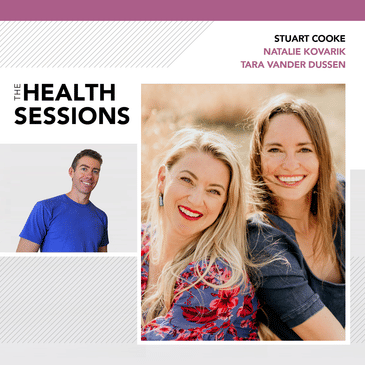
This week, I'm excited to welcome Natalie Kovarik & Tara Vander Dussen to the podcast. Natalie Kovarik and Tara Vander Dussen are the co hosts of the Discover Ag docu-series as well as the popular podcast Discover Ag. Collectively they have been advocating for agriculture online on various social media platforms for over 10 years. Together they have fostered a community of over 255k, spoken on stages across the nation and globe, and empowered a community too reconnect to agriculture and the hands that feed us.
Some questions asked during this episode:- We're told that cattle are heavily contributing to climate change, what are your thoughts
- Please explain the difference between monocropping vs regenerative agriculture.
- How important is animal protein compared to plant-based alternatives?
[00:00:00] brought to you by 118nutrition.com.au Welcome to the Health Sessions podcast. Each episode we cut to the chase as we hang out with real people with real results. Hey, this is Stu from 118 Nutrition and welcome to another episode of The Health Sessions.
[00:00:29] It's here that we connect with the world's best experts in health, wellness and human performance in an attempt to cut through the confusion around what it actually takes to achieve a long-lasting health. I'm sure that's something that we all strive to have. I certainly do.
[00:00:44] Before we get into the show today, you might not know that we make products too. That's right, we're into whole food nutrition and have a range of superfoods and natural supplements to help support your day.
[00:00:54] If you are curious, want to find out more, just jump over to our website. That is 180nutrition.com.au and take a look. Okay, back to the show. This week I'm excited to welcome Natalie Kivaric and Tara Vanderdussen to the podcast.
[00:01:12] With backgrounds in dairy farming and cattle ranching, Natalie and Tara co-host the Discover Ag Docuseries as well as the popular podcast Discover Ag. Collectively they advocate for agriculture and help consumers understand how their food is actually made.
[00:01:26] In this episode we discuss their thoughts on cattle and climate change, the nuances of regenerative agriculture, the importance of animal protein and so much more. Over to Natalie and Tara. Hey guys, this is Drew from 180 Nutrition and I am delighted to welcome Natalie Kivaric
[00:01:47] and Tara Vanderdussen to the podcast. Ladies, how are you? Hi, thanks for having us on. Thank you. I'm very excited to be here. Yeah, super excited as well because it's really, it's one of these topics that
[00:02:00] I think we haven't spoken about at much length on this podcast but I'm really, really interested because this whole crazy narrative seems to be changing in terms of how we view agriculture and what we should be doing and eating and how we should be thinking.
[00:02:15] So I think that you're going to frame that quite nicely for me with your perspective in a quite a different lens. But first up, for all of our listeners that may not be familiar with you or
[00:02:25] your guys work, I'd love it if you could just tell us a little bit about yourself please. Yeah, I can go first, Tara here. So I am a dairy farmer in New Mexico within the United States and I actually got my degree in environmental science.
[00:02:39] So backing up a little bit, I grew up on a dairy farm. I'm actually a fifth generation dairy farmer, got my degree in environmental science, ultimately married my husband who was also a fifth generation dairy farmer and came back
[00:02:48] to his family farm and then started practicing environmental consulting for dairy farms throughout New Mexico. Along that journey, I had two daughters and when my daughters were young, I was just seeing a lot of misinformation and kind of what you just alluded to a minute ago.
[00:03:03] Just like we are constantly being bombarded with information about food and farming and a lot of it is not factual and just a lot of misconceptions in there. And so I started building a platform around being able to share about what dairy
[00:03:15] sustainability looked like and just kind of my work of what I was seeing on farms that I was going to on social media and just kind of opening up our farm to people on the internet.
[00:03:23] And through that journey, I ultimately met Natalie and we launched our podcast and documentary series called Discover Ag and I'll let her jump in with a little bit of her background and then kind of where we have taken that podcast. Fantastic.
[00:03:38] Yeah, so like Tara, I also grew up in agriculture, actually grew up on a cattle ranch in Southwest Montana, also in the United States. And unlike Tara, I guess my introduction to social media is a little bit different.
[00:03:52] I actually launched a direct-to-consumer beef business and so that was my first kind of how I started sharing online specifically about agriculture. My degree is actually in pharmacy. So like Tara, I also kind of got a degree outside of agriculture and just kind of
[00:04:07] found my way back to the ranch. But when I was sharing online for the direct-to-consumer beef business, I was ultimately obviously trying to sell beef, but I kept seeing as we've been continually looting here in just these first few minutes a lot of misinformation.
[00:04:21] And so I really felt called to share more broad scope about agriculture and kind of be a larger voice for things going on in the industry instead of just selling beef. And so I ultimately pivoted out of that direct-to-consumer beef business and
[00:04:35] then like Tara alluded to, that journey of sharing online ultimately led me to her and launching our podcast Discover Ag. Brilliant. Wow. Beef and dairy. Well, it's going to be a good conversation. I mean, those two components make up almost every meal that I consume.
[00:04:50] And over the last 15 years in this business, I've been riding the roller coaster of dairy is good, dairy is bad, beef is great, but you reduce your beef and all of this kind of crazy, crazy, crazy information that seems
[00:05:08] to change all the time and is very sketchy in terms of the foundations of where this information actually comes from. So we are told then that cattle at the moment are problematic for climate change and it doesn't make a great deal of sense to me that cowfarts are
[00:05:25] causing this kind of crazy climate that is changing. What are your thoughts in terms of this big narrative about we've got to reduce the consumption of meat because it's killing the planet? Where do you go from there? Yeah, so a few things.
[00:05:45] I think it is very much rooted in misinformation. You know, back in the day, I think it's been like 10 years now that we had the UN FAO's livestock long shadow that came out where they said that agriculture specifically cattle was this huge portion of greenhouse gas
[00:06:00] emissions that has since been kind of debunked that essentially when they looked at cattle, they took the entire carbon footprint from beginning to end every piece of it. And when they looked at transportation, they took only tailpipe admission. So you were not comparing the same thing.
[00:06:15] They weren't taking into account what went into building the car or when the car decomposed. So you literally were just comparing two different forms of metrics. And so I feel like once that bell was wrong, it has been very difficult
[00:06:27] to unring it and bring back some of those statistics that got put out there and you see Netflix documentaries, all sorts of things. It's still referenced that original report even though it's been rolled back and they've released new data in that same theme.
[00:06:40] I think that sometimes when we talk about cattle's impact on the environment, we very much have carbon tunnel vision. Cattle cannot simply be put to this is how much carbon they produce and that's it. They play such a more nuanced role in our food system and our entire
[00:06:55] ecosystem, whereas cars are more of just a carbon conversation. Right? It is carbon that we are extracting from the earth and that is ultimately going into the atmosphere. Whereas cattle as you know, I'll let Natalie jump in here,
[00:07:06] have a role in soil health and the consumption of byproducts from other things. Like there's so many other things that cattle contribute to that we can't just be so focused on just the carbon number. Absolutely makes sense. Yeah, I think as Tara was mentioning that carbon tunnel vision
[00:07:24] is actually, I would use the word almost dangerous too, because she mentioned all of the nuances that were kind of missing in that conversation. And you pair that with the result that we would ultimately end up cutting out meat from our diet, right?
[00:07:39] And I think when you pair the tradeoffs of what studies show that around less than 3% is what our greenhouse gas footprint would be decreased if we all went to that vegan vegetarian diet. So we're not denying that there is an impact there,
[00:07:57] but it's pretty miniscule and then you think about the opposite end, which I said is cutting meat from our diet and that's a pretty high protein diet or a pretty nutritious piece of protein that we're consuming. And so if you think about that tradeoff of what we're gaining
[00:08:10] for what we're losing, I think it's pretty dangerous to recommend. So if we decided to take that information to heart and reduced, heavily reduce the consumption of meat products in our lives, I'm guessing then that that would be which shift over to a monocrop focused agricultural system,
[00:08:34] largely based on corn, wheat and soy versus perhaps Regen, which is I've had lots of conversations around Regen and maybe our listeners are not quite familiar about how that or that term actually means. So let's get into the conversation in monocropping
[00:08:51] versus regenerative agriculture and how that might be important to completely understand that before we even consider to make any dietary changes. So what is what is the difference first up then monocropping versus Regen? Yeah, there's such a good study out there actually about
[00:09:09] making our diet quote unquote more sustainable at the risk of making it less nutritious and less diverse, you know, having all these different foods. I do think there is a misconception that if you give up animal ag that you are suddenly eating all of these
[00:09:23] different types of vegetables when in reality our diet currently here in the United States at least is a very like quote unquote plant based. I think it's over 60% of our diet is already plant based, but it is as you alluded to these monocropped cultures.
[00:09:36] I mean, if you're eating a plant based meat, you are not consuming, you know, the broccoli and asparagus of the world, you are consuming the soy based products which are those monocrop monoculture crops. And yeah, that goes into what I kind of alluded to
[00:09:52] about the soil health and the cattle consuming by the products, which I do think is a part of the Regen conversation and getting into that regenerative ag. Natalie and I would look at it as a spectrum that it is
[00:10:05] not just simply like yes, I'm a Regen farm or no, I am not. Both Natalie and I ultimately ship our products into the conventional beef for Natalie and dairy for me, but both of our farm slash ranch have a lot
[00:10:20] of Regen practices that we implement that I think would surprise people even though it's a part of the conventional food supply system. Yeah, going back to your question, I think what people don't realize if we went, like you said, we follow the guidance, the misinformation
[00:10:41] to go all plant based. What that would mean in my eyes personally is almost a removal of an ecosystem that we have naturally intact, right? And that's what you're asking about with the monoculture because monoculture is going to be one big crop over and over and over again.
[00:10:57] If you look at a cow out of pasture grazing, that's not what you're getting. You're getting plant diversity and you're getting intact ecosystems that are actually working together in system. And so if we really shifted to that different model, I feel like we're losing essentially almost like
[00:11:13] a piece of nature that was intended to function at its root, how it was created. Yeah, well it seems to me it's an integral part of the ecosystem that has always been there that has been uniquely designed to support and sustain life.
[00:11:29] And to take that out, I don't know whether you guys have seen the movie Interstellar and it's Matthew McConaughey movie but apparently they have to leave the earth because it's unsustainable anymore and the whole, the fields are just dust bowls because they've been farmed and farmed
[00:11:45] and farmed and tilled and tilled and there's no life left in the soil. And I kind of feel that they're so different. There's such contrasting visual images of beautiful lush farmland with pastures that are populated with animals and plants
[00:12:04] doing what they've always done since the dawn of time versus this very, very industrialized agriculture approach that it's stripping the earth for vital nutrients and minerals that are required again and again and again and again. So from a scalability perspective, like regenerative, regenerate agriculture
[00:12:26] with the growing population, how scalable is it? Yeah, so we are actually a larger size dairy farm here at our, still family owned and operated. I live right here on my dairy, my backyard is our close up pen, but we're a larger farm
[00:12:45] and I feel like there are still things. So, our cows are not out of pasture. Being a dairy based, we are in, our cows are in large open lot pens, but one of the things that we do is we actually compost all of our manure.
[00:12:57] So that way, even though we're collecting like that manure there in a pen instead of it being on pasture, we're ultimately taking it back to other farms, other soils. And one of the best ways to improve your soil is to include cow manure,
[00:13:10] which improves organic matter and all these other things, all these like principles of soil health. And so we're still trying to like emulate that and put in those more regent practices, even on our larger scale farm, of being able to send those nutrients out to,
[00:13:26] the farmers fields that are growing, the crops to feed our cows. And so making that system kind of like a closed loop system. Yeah, I think when you think about scaling regenerative agriculture, I think what would be most important is people need to be open to the idea
[00:13:43] that regenerative ag isn't like a check the box. Every single farmer ranch is gonna look the exact same way. Every single practice is gonna be the exact same way. And we're gonna scale it all the same. Like right here's your blueprint, every rancher and farmer go forth
[00:13:57] and now scale your system to these plants. Cause that's just not how agriculture works. Your guys' practices in Australia, New Zealand are gonna look much more different than in the United States. It's gonna look different than in Canada, than in Mexico. I mean, that's just a global aspect.
[00:14:13] You can narrow down on how within the United States practices here in Nebraska would look completely different from regenerative practices in Georgia or Florida or Texas because you have to deal with soil and weather and a lot of different things that are going to
[00:14:28] be very diverse when it comes to the landscape. And so I do think regenerative ag is, quote unquote, regenerative ag is scalable. I just think it has to be understood that it's gonna be scaled in different ways and there are gonna be different practices
[00:14:45] that are scaled for farmers in different areas. Yeah, absolutely. So let's talk about soil health then because we're told at the foods that we consume, whether it be fruits or vegetables, less nutritious than they used to be 50 years ago because of the minerals in the soil
[00:15:07] that we continue to over farm for one of the better phrase. Is that correct or do you guys have a different opinion? Yeah, I have kind of died into this topic and have found no substantial evidence to prove that. I mean, as a soil scientist,
[00:15:26] one of my main jobs was sampling our soil every single year. We would sample it at one feet, two feet and three feet so we could know exactly what was going on through the entire soil profile because when you think about that root system on a crop,
[00:15:37] you wanna think about where the roots are at throughout the soil profile and what nutrients they're able to pull from. And so I think that is one of those things I've seen it everywhere that's like an apple is you have to eat 10 apples for it
[00:15:48] to be the same as it was 50 years ago and there's just not a lot of truth to that. It is one of those things that it's kind of like taken, I feel like social media and it has really gone viral
[00:15:58] without a lot of substance or research to prove it. That's interesting. Yeah, I mean, that's a... It's funny isn't it? In the light of social media, everyone's an influencer, everyone has an opinion. Food is like religion now and how do we know what's true?
[00:16:17] Like how do we know? It's just this dividing scale. Similarly with diet, veganism, vegetarianism, all the way through the myriad of different diets to carnival at the other end of the scale. Everyone's got an opinion and they're all medical professionals. Just scratch my head.
[00:16:36] Where do you sit in the current plant-based agenda? Because again, we've been through the low fat message. We're kind of now into more the low carb message and very much being berated by the plant-based messages. Everything's plant-based. It is like milk with a Y.
[00:17:00] I mean it's just ludicrous. Oat milk, soy milk, coconut milk, almond milk, whatever. I mean it's not milk but it seems to be healthy for us. So we're told. What do you think about that? Yeah, I feel like this pendulum continues to swing in all the different directions
[00:17:19] and I do feel like maybe the pendulum right now is swinging. Like I feel like the food era that Natalie and I probably grew up in let our parents, like and even grandparents, it was convenience, right? We ended up moving to this very packaged process
[00:17:30] of food that you had the TV dinner that you just like were able to give your kids and even the lunch bowls that you were giving your kids in their lunch boxes. And now I feel like we're swinging in the opposite direction of whole foods, whole ingredients.
[00:17:42] And but within that, a lot of food choice, like you said, I mean the dairy section, quote unquote dairy alternative, we are slapping this plant-based label on things and just calling it healthy, calling it nutritious, calling it more sustainable. I mean, I think people see plant-based
[00:18:00] and their mind goes to sustainable, healthy. Even though those two things may not be true, they're not proven that there's no basis for those two things except for that we've been kind of marketed this label. Yeah, it's very interesting and very hard to understand still
[00:18:22] which direction is the right direction. But I think that, I think whole food always and probably protein focused given the fact that we're all growing and we're under more stress as well. So question then in terms of animal protein,
[00:18:44] we're told that plants can give us all the protein that we need and if we've eaten enough legumes or nuts and seeds or whatever it may be that we get full spectrum of amino acids and the building blocks. Although I'm not too sure that that's quite right,
[00:19:01] how important is animal protein? Do you think in comparison to the plant-based alternatives that were currently offered? Yeah, so we actually interviewed a registered dietitian on our podcast this summer. We actually did a debunking series. It was kind of fun summer series.
[00:19:18] We did where we debunked like some of the, anti-food, anti-ag, documentaries that we felt were kind of portraying our food system in the misinformation light. And so we brought on a registered dietitian to debunk. Was it game changers for something? Yeah, and she had a really interesting perspective.
[00:19:38] I really loved that episode with her and she did confirm what you said. You can get all of the protein you need from a plant-based diet. But what I think is really important when it comes to that conversation that is always left out about it,
[00:19:53] if you're talking to someone that is promoting the vegetarian or vegan diet, is that it is going to be kind of a challenge to do that. You have to supplement, you have to understand what you need, what you're missing, the amounts.
[00:20:07] Like you really have to almost be super food intelligent, right? And I think that's promoted across the masses, whereas people aren't maybe paying attention or maybe they don't even have access to all the supplements you need and maybe they don't have the money
[00:20:20] for all the supplements you would need. And so I think a really important thing about the animal protein is that it's really simple. It's very straightforward. You do have easy access to it and you don't have to supplement and it has everything you need in it.
[00:20:33] So it's just a much more simpler, straightforward. I feel like careful option to promote to the masses when you're trying to get all the essential proteins and amino acids you need compared to trying to go through almost the rigmar of almost orchestrating your diet
[00:20:52] when you're on the plant-based diet where you're adding in different segments to equal what you need, whereas the animal protein is whole and complete by itself. So tricky. And visually it makes a lot of sense that you're eating these plants and they're beautifully colored
[00:21:09] and they're flowing as the wind blows in the pastures and there's a rainbow in the background and the farmer comes out and he's got a big smiley face versus animals and slaughter and everything. They're two very, very distinct and quite contrasting images.
[00:21:30] But I think the reality is from, I mean you guys are farmers that it's probably not like that and there is a lot of industrial intervention irrespective of whether you're eating one diet or another. In terms of things like food quality, there are so many buzzwords now
[00:21:52] that it's, Regen is one buzzword but grass-fed, organic. Everybody avoid grain-fed because we don't want any of that. Is there really a big deal, a big difference between grass-fed and grain-fed or are we just, these are just nuances that we don't really need to be concerned about?
[00:22:21] Speaking from a beef lens and then Tara can add into the milk if she wants to. I think you're kind of giving Tara and I one of our favorite soapboxes, which is food labeling and how kind of off course we have gotten as a nation, as a globe
[00:22:39] when it comes to food labeling. I think it started out obviously with really good intentions where we were trying to bring more information to consumers. They are now three generations removed from where food is grown. And so of course they're going to have questions,
[00:22:53] concerns and we need a way to answer them, right? Rightly in the grocery store. So it makes sense to label our foods. Somewhere along the way, I think we have pivoted from information to our consumers to basically a marketing tactic and a marketing point.
[00:23:08] And that's really how I see food labels now. It's just a way for a company to sell something unfortunately and not really like have, I guess the consumers best interests at heart. So when it comes to grass, bed, grass, finished grain fed,
[00:23:25] when it comes to a nutrition standpoint, there isn't going to be a big difference. Like if you are looking to get the protein and all the essential macro and micronutrients that you want from beef right now, it's shown, I mean there are minute differences
[00:23:42] but nothing that would want to steer you to purchase that grass fed over the grain fed when it comes to a nutrition profile of the beef. Now there are going to be differences when it comes to the on the ground practices on the operation,
[00:23:56] which would maybe be important to some people. Obviously if an animal is grass fed and grass finished, they are going to consume only grass for their entire diet, which means, well, and again, I think sometimes people say that, see that grass fed label and associate it
[00:24:14] maybe with animal welfare or even like where, how the animal was raised and it's not really that. It's literally just nutrition labels so it just means the animal ate grass. That could mean they could eat it in a field or a barn or a pasture.
[00:24:33] Like they can eat that anywhere. I think people just assume that it's going to be out and I deal it green grass, grazing and that is the case sometimes but that's also not the case. You could have a grass fed, grass finished animal
[00:24:45] that was in the feedlot, right? Because it only has to do with what is in their diet. On the flip end, grain finished are going to enter what we in the States call a feedlot. And so that is where some people have a concern
[00:24:56] about maybe the practices there or what that means for the food system and they would choose the grass fed option in opposite of the grain fed. So I think it's really important to remember that when you see those grass fed, grass finished, it's really just a diet label.
[00:25:13] All it's telling you is what the animal is eating. It is not telling you anything else about how the animal was raised, how it was cared for, anything else about its lifestyle. It's literally just telling you that the animal either ate grass for its entire life
[00:25:25] or it ate grass for three-fourths of its life and then later one quarter of it ate grass along with grain. I wonder whether we should be more concerned about organic produce versus industrialized non-organic produce. Just with terms of the volume that we're expected and advised to eat
[00:25:46] and perhaps the pesticides and everything along that comes with that as well because broccoli for instance is not an apple. It doesn't have a shiny skin. It's not so easy to give that a good rinse under the tap and get whatever we might think is on there off.
[00:26:02] Do you have concerns or an opinion over non-organic vegetables and fruits? Yeah, so I'll start by saying neither Natalie or I are organic farmers so definitely can't speak to everything but I will say I think there's a misconception that organic means pesticide-free
[00:26:19] and what it actually means is that organic has a different like there is approved pesticides for organic but they are not synthetic. You cannot use synthetic pesticides on a granix but you can still use pesticides that just have to be on the approved here in the United States.
[00:26:35] It's obviously regulated by our USDA or US Department of Agriculture. It's different in every country. We're gonna have what is approved and what is not approved for organic use. For me personally, I'm Leakey Green. This is something we studied a ton in college.
[00:26:48] You mentioned that you cannot just simply like wash things off. There is a lot and there's a new documentary on Netflix called Poison that Natalie and I are gonna cover on our podcast coming up in the future but it kind of gets into some of the concerns more
[00:27:02] about like contaminants that would be like foodborne illnesses and that is something we study a ton in college versus like the pesticide. You mentioned I had a teacher who would not be her kids under 12 years old Leakey Greens because of how difficult it is to wash off
[00:27:16] and that can be organic or not. Organic can still use different types of manure and if there was a pathogen in there that you could like transport that obviously into your house, into your kitchen, into your refrigerator and then ultimately onto your plate.
[00:27:28] And so I feel like while I do have some concerns about Leakey Greens, it's not necessarily in the pesticide category. It's more in the overall issues of some like foodborne illnesses around Leakey Greens and that's like obviously an entirely different conversation but I think that sometimes people confuse
[00:27:47] like pesticides are organic and non-organic with like healthy or safe or all of these different things when it really comes down to actual farming practices. Organic versus non-organic is more of the actual like on farm management practices than anything else. Yeah, that's interesting.
[00:28:07] So question then that I really wanted to ask you given your background in dairy farming, raw milk. So we're in Byron Bay, we live in an area where raw milk is only available in containers for bathing or peps. So it's not allowed, so it's not safe
[00:28:31] according to the powers that be. But it is available. There are many farms around here that you can go and you turn up with your bucket and you can get raw milk. I know that it's a little bit different over in the States.
[00:28:45] Some States, yes and other States are definitely no. Where do you sit on the raw milk conversation in terms of what you know and maybe even what you do on your particular farm? Yeah, so in the States it is some States like Texas,
[00:29:04] it's only allowed for pet food as well. Other States it is legalizing. A lot of States are it's up for debate right now whether to legalize it. I'll give a little bit of background myself and then I'll come back kind of around to the question.
[00:29:15] I actually drank raw milk for most of my life until I was pregnant with my first child and while I was going to college I did not drink raw milk, I just bought it at the store. Since having my first child I had switched pretty much
[00:29:26] just to conventional regular milk from the grocery store. I don't necessarily buy into the camp but I think that raw milk has like super food powers. I think milk in general has super food powers that it is a great source of protein.
[00:29:40] You can consume it in a lot of different forms. It's like every day in my meals I try to incorporate dairy no matter what type of dairy it is. But at the same time I really believe, Natalie and I both believe we talk about this
[00:29:54] a lot on Discover Out podcast that we believe in food choice and that people should have the choice they make. At the same time I think they have to, if they make a choice, need to accept a certain amount of risk.
[00:30:03] I think as a society we have gotten to a point where we want to assume when we walk into a store it is a safe food. This even goes back to the leafy greens. We want a safe food. So I think our, you know,
[00:30:13] the powers at B set up a system that meant it was safe which meant pasteurizing milk. Pasteurizing milk makes it a safer product. It is still a nutritious product. There's some conversation of if you lose some of the nutrition when you pasteurize it.
[00:30:25] I mean, I think it's similar to like steak or if you cook fish or any of those things, you know, you may have some changes in the nutrition but you're overall getting a really nutritious product. And so I think ultimately if you consume raw milk
[00:30:38] you have to accept that risk. I always compare it to like I probably wouldn't pick up sushi like on the side of the road and like a part of town I had never been or like I didn't know the restaurant or you know all those same things.
[00:30:50] If you're going to choose raw milk make sure that your bottles are sanitized. You know, you talk about bringing your own container to the store or to the farm. A lot of times foodborne illnesses can actually come from the container itself.
[00:31:02] And so making sure you're sanitizing your containers you're keeping them in a sanitized place until you're filling up with that milk making sure you're consuming that milk in a quick you know, in a certain amount of time a very quick amount of days.
[00:31:14] It's not going to be like that ultra pasteurized milk that can sit on the shelf for, you know six months and be fine. You need to be consuming that product right away. And so there's just I think certain precautions that people need to take if they ultimately choose
[00:31:27] to consume a raw product like dairy. And so it's not that I necessarily for against it. I think my hard part is when someone contracts a foodborne illness from raw milk, which is more likely I mean, it's not an absolute it's still a minimal risk
[00:31:41] but it's obviously more likely if you consume a raw product is they ultimately blame all dairy. So if they have a bad outcome they ultimately are turned off of all dairy and they tell everyone they know like dairy is dangerous. And it's that's not true.
[00:31:56] You are accepting a certain level of risk that's associated with drinking raw milk and so you need to be cautious of that. Yeah, it does seem that the foods that we've been consuming since the dawn of time are suddenly dangerous yet all of these franken foods
[00:32:09] that are coming out as supposedly safe. I mean, I kind of compare it to like if you want to stay food you could go in and say the cereal box the ultra processed cereal is going to quote unquote safe, right? There's probably going to be very little chance
[00:32:22] of you getting a foodborne illness even if it's stale, right? You're not running good necessarily get sick from stale cereal but like whole foods that are in their natural state like we have to be more conscientious of that. And I think that is someplace in society
[00:32:35] we really got lost along the way is confusing health and nutrition of what those whole products actually offer as far as nutrition. Yeah, I completely agree. Have you changed your perspective on nutrition? Have you changed your perspective on nutrition and nutrition and nutrition of foods that you eat
[00:32:55] over the course of what you've been doing at the farms and also the deep dives that you've been doing in all of your social stuff as well? Yeah, I think that Natalie can jump in. I know for me the more that we have learned
[00:33:09] on DiscoverAggie the older I get the more I learn about farming I am turning to again those whole foods and I'm trying to consume more animal protein. I have really made it my goal in the last nine months complete protein.
[00:33:21] And I had just noticed like the older I get and you kind of even said we're always constantly like growing, we're changing our bodies and like that need for protein is not going anywhere. And so trying to have that focus.
[00:33:31] And I would say I think Natalie feels similarly as far as that as well. Yeah, I was gonna say I fortunately grew up with a pretty, I don't wanna say like health conscious mom because that's not the angle she's coming from but I definitely think she was doing
[00:33:47] a lot of these food practices before we were doing them. Now, I mean she made her own homemade bread back then we couldn't have any sugar cereals in the house. Like she I think really instilled pretty good food practices from a very young age.
[00:34:01] And so fortunately I haven't had to go on like a food journey that maybe like the typical average American goes through looking at like what our average standard American diet is. So I feel very blessed from that standpoint that I've always kind of grown up in a household
[00:34:17] that it was like whole foods is the most nutritious. And usually animal protein was like the first thing on our plate and then we built our meals out around that which is still how I eat to this day. But like Tara, the more we have deep dive
[00:34:30] on Discover Ag and the more I've talked to like registered dietitians and just kind of gotten into I guess maybe the more nutrient side as you're aging especially for women. It's just really important that we retaining muscle mass.
[00:34:46] And so I have like Tara also tried to be more conscientious of getting protein at every single meal, hitting larger protein numbers so that hopefully I can carry more of that muscle with me into older age. And it's amazing what happens when you do start the day
[00:35:01] with protein as well. I think it releases you from this prison, this hunger prison where you're constantly scratching for something that keeps you sustained and associated. Yeah, I was gonna say that is actually one thing that we have changed too. We've become pretty rigid about starting our day
[00:35:20] with an animal protein and from a meat standpoint and then also mixing it with eggs and that's pretty much how we start all of our breakfast. And I will say there are days where I don't feel like I need to even eat lunch at lunch.
[00:35:33] And I can remember when I used to start the day with something else, let's say it was like berries and granola or something which still is not like a terrible food choice, but I definitely felt like you were having hunger pains earlier on in the day.
[00:35:46] So there is something like that satiary point of meat and protein about how it really does fill you up. Back in the day, I used to start my day with a big bowl of oats and a banana mixed in and it was delicious.
[00:36:01] But and I would cycle to work which would take me about 40 minutes and I would be so hungry when I got to work. I'd be shaking, I'd be hypoglycemic. I was scratching for my next fix and it would invariably be a muesli bar
[00:36:16] or a piece of fruit or something along those lines. And nowadays, if I do actually eat quite a lot of minced beef and I like to put eggs in that and get some avocados and some veggies as well and it's so satiating, so filling
[00:36:33] and so sustaining that two o'clock will come and I won't even be thinking about lunch and it just goes to show that perhaps it's always important to question a lot of the advice that we're given irrespective of where it comes from because there may be other,
[00:36:53] perhaps other things at play. Which- Oh, sorry, I was gonna say when you had alluded or had mentioned social media information out there there's actually a study I came across where they had shown basically that if you can invoke a negative emotion,
[00:37:14] so anger or outrage, whatever it is the virality of the piece increases by 30 to 40%. I think people are aware of that. And so I think that's why you see these diverse stances in society now. It's almost like we go to extremes.
[00:37:32] One extreme on one side and one extreme on the other because we're rewarded for those extreme stances. If I take this extreme stance, it's going to upset and invoke that percentage of the people on the other side that feel opposite of that,
[00:37:45] which then as a content creator gets my piece to go viral. The more conflict we can create online, I feel like the more viral the piece. And like you said, food has now become religion. And so when you put all of that stuff together
[00:37:58] it's just the perfect recipe immediately for almost recommendation disaster because you're taking extreme stances trying to paint it in a way that is going to evoke conflict or discussion or outrage to get the virality portion of it. And then there's typically misinformation
[00:38:15] just coming from maybe who's sharing it or talking about it or maybe there's bias placed into it. And so I do feel like it's really important to take that initiative unfortunately to see a headline and dive deeper. That's really actually why we started our podcast
[00:38:30] Discover Ag is because we felt like there were all these headlines and all of these maybe social media influencers or food influencers that were putting out all this information and all these pieces and none of it was ever coming from the perspective of a farmer or rancher
[00:38:46] or even maybe including a conversation with a farmer or rancher in an article. And so we thought maybe we'll take these headlines and just give our perspective on them because that's not being represented anywhere else in media very typically. Yeah, it's tribalism 101.
[00:39:01] And one of the things before we dive into Discover Ag that I wanted to ask you was the topic of cholesterol because we are told that we need to reduce animal-based protein because it can lead to high cholesterol.
[00:39:16] And the way to do that is to introduce more plants. And again, such a... It makes sense visually. Clogged arteries with animal fat and things like that but then when you dig deeper you realize that it's a radically different message and there's a lot more going on
[00:39:34] and far deeper nuance than you could ever have imagined. And also there is lots of vested interest in the agenda that dictates where we consume our protein and the foods that we eat. Have you dived into the world of cholesterol and asked the question,
[00:39:55] how does red meat play a part in a truly healthy diet where longevity is the main goal? Yeah, so I saw something on the internet, probably went viral, but it actually really resonated with me and made me kind of look into it more.
[00:40:12] And it was that we are blaming modern diseases on a food that we have consumed for tens of thousands of years. And I think that was so well said that we have been consuming red meat and dairy for a really, really long time
[00:40:26] when you go back in the record books and look back at all the science there. And yet these heart diseases and things that are all on the rise are modern diseases. And so, and I think another piece of that as well
[00:40:39] that does play, the meat does play into it is, a lot of the studies we look at here at least in the United States and I think this is similar worldwide is when they study a diet, they look at the standard diet
[00:40:49] and then they compare it to someone that has decided to maybe be vegan who is then incorporating lettuce and fresh vegetables into their diet. And instead I would love to compare a person who is eating whole foods, whether that is animal proteins
[00:41:02] or fruits and vegetables to a vegan diet and then to the standard classic diet that we see. I think those are three vastly different things. And I think it even goes into some of it that when someone changes to being a vegan, they say, quote unquote feel better.
[00:41:17] Well, yeah, you may also be giving up sugar. You may be giving up alcohol. You may have quit smoking. You may have quit all of these other things in your health journey. And yet you are blaming meat for the reasons you didn't feel good.
[00:41:28] And I think that is a problem with studies. I think it's a problem with like anecdotal evidence. I think in so many different things. And so it just goes back to that, like if you, I just don't feel a world where if you are eating a steak
[00:41:39] or you're butchering an animal and having in its most pure form, that that is the root. Like that doesn't say that I think a hot dog is healthy for you. Maybe not all the time at least. And so it's just like there's so many other factors
[00:41:53] that we're not considering and we know that it's really hard to study, nutrition and people, because people ultimately end up telling researchers wrong information. They end up saying they're doing better than they really are. All these different things that go into these research studies
[00:42:08] that have led us to this like high cholesterol is caused by red meat conversation when there's so many other layers we've got to peel back in order to get to the root cause of these. Absolutely. Don't blame the butter for what the toast did. Don't blame the burger
[00:42:25] for what the fries and the soda did. It's context. And when you dig into those studies you realize that epidemiology is very, very open to interpretation in terms of asking people what they have consumed and what kind of lifestyle and bundling red meat in with hot dogs
[00:42:49] and all of the other process meats as well. It's kind of crazy. Yeah, interesting times. Very interesting times. So tell us then about Discover Ag. So I was blown away by the production quality that you guys put into that. It was really quite unexpected.
[00:43:09] What can our viewers expect if they go and dial in and want to find out more from Discover Ag? Yeah, so we are a every Thursday podcast and thank you for your kind words by the way. And we kind of alluded to it earlier
[00:43:26] but we basically take the top three trending topics or headlines in the Ag and Food space that week and we really break them down. So we'll cover everything. We'll cover worldwide news. We've covered like farmer protests going on in the Netherlands.
[00:43:41] We've covered plant-based agendas going on in Italy. We have covered things here in the States. So really anything that is just like a trending headline we cover and break it down. So there's a lot of fun, exciting, diverse topics that we cover in our podcast
[00:43:54] all related basically to the food and ag space. In addition to that, as Tara said at the very beginning of this interview we are pairing that with what we are hoping will eventually be a docu-series that could be the visual component that's picked up on screen
[00:44:09] where we're actually going out to farms and ranchers across the nation and kind of exploring our diverse food system and what it takes to get from out of pasture onto plate. And yeah, we have filmed two episodes now. We have filmed a cotton episode
[00:44:25] and then our most recent one which we're pretty proud of and excited to get into the hands of individuals would be one that we did on sheep and wool production in Montana. So we try and pick maybe lesser known parts of agriculture and kind of show
[00:44:42] what it really takes and discover the world of ag. And so, yeah, we're hoping to bring both the visual and auditory component for people who enjoy the bull. Brilliant. We talked a lot about the grocery store, fear, misinformation.
[00:44:57] And I think one of the things our goal with our podcast was is you see a headline that can really like pull out your heartstrings or make you feel some emotion or another emotion. And we wanted to kind of take that fear out
[00:45:07] of going to the grocery store. We want people to go to the grocery store and feel confident whether they're choosing the organic strawberry or the conventional strawberry or the grass fed beef versus the regular beef that they're making a choice based on like knowledge and information
[00:45:20] and that they don't have to make it based on fear or unknown or misinformation. But it's really like rooted in the facts and straight from the source. And we try to bring that in like a fun and relatable way, including just a lot of
[00:45:35] relevant topics to what's going on in the world today. And that's yeah, that's really our goal. Love it. Yeah, I'd love to see that on Netflix in its entirety because I think the message is so important and there are so many misunderstood concepts out there.
[00:45:52] Everything from the question of plant versus meat, the question of I don't want to eat meat because I don't want to put on too much muscle from a female perspective. All needs to be covered by people that are living and breathing and passionate and actually understand what's happening
[00:46:08] from a grass root perspective. So yeah, unbelievable. Wow. Good on you. So we're just coming up on time. Interested then from a farming perspective, which is often viewed as very wholesome and back to basics. Perhaps some just three top tips that you could share
[00:46:31] that you may think may have the biggest impact on our overall health. And it doesn't have to be food related in any way shape or form. But just perhaps the things that you guys have adopted driven you to feel your best,
[00:46:44] which then allows you to do the great stuff that you're doing at the moment. Yeah, I can start, you know, kind of like Natalie's gonna say something different, but it's probably gonna be kind of similar. You talked about agriculture being kind of like
[00:46:58] back at its basics and I think that that is a lot of it. I mean, that's my top three tips right now for what I'm doing. I mentioned I'm trying to get more protein. I want to do that. I'm trying to lift weights.
[00:47:08] So, you know, Natalie mentioned like the adding muscle and then movement, preferably outdoors, getting outside, getting, you know, out there and whether it's just a simple walk with my daughters. Like that's really important to me. I've made like those three things have become top priority for me
[00:47:24] and I am framing the rest of my day around how I can ensure that those three things are happening. And then it does. It feels like the rest of things kind of like fall into place for me and I feel better. I sleep better.
[00:47:36] All of those other things that I also want seem to all be tied back to like kind of, good nutrition, getting outside and getting good movement. And that's the basis of it. Brilliant. Yeah, love it. Yeah, my number one for sure
[00:47:51] even I think the on diet at least for me personally is the outside portion. I think we have become radically disconnected from spending time outside, from connecting to nature. And I think it has taken more of a toll on us as a society than people have realized.
[00:48:10] We have always been really food and exercise focused I would say as a society from the standpoint of like those are very important for mental health and like go to overall health of our body. But we lost somewhere in that conversation, I think nature.
[00:48:28] And I really think it plays more of a role than people are aware of. And if you think about how some people wake up and they're inside and then they get in their car and then they walk inside to their job and they get back in their car
[00:48:39] and then they go back inside to their house and they're having no connection with natural sunlight or soil on their feet or even noises. I think just being in nature with some time it being silent or sometime experiencing the natural noises of nature.
[00:48:54] I think we will get to a point where we realize, oh wow that actually maybe is just as important as some of the food we're putting in our body and maybe some of the movement we're having for our body. So I for anyone listening that is maybe
[00:49:06] I feeling called out right now by me, I think if you're wanting to do something to feel better I would try implementing more outside time into your schedule, whatever that looks like whenever you can get it. I mean there's a lot of studies that show
[00:49:19] just even waking up with sunlight first thing is can do drastic improvements for your mental health. And so I really think that that outside portion we need to get back to that as a society. And then kind of paired with that,
[00:49:34] I think one thing I have actually really been trying to focus on is consumerism and like less. And so I mean I know that's not really totally tied to health and wellness but again I think that is something that we've become really skewed in as a society
[00:49:50] and I think getting back to being content with less could actually go a long way for mental health and wellness as well. I think so, yeah I'm totally down with that. I am very interested in the minimalism movement and how it frees up the mind.
[00:50:08] It's this, I mean being surrounded by so much clutter and possessions and being free from that is it's like Feng Shui for the mind. It's just, it's like an awakening, a rebirth. I love it, I love getting rid of crap. No that's great.
[00:50:25] I have been on the same, I have been getting rid of crap that's exactly how I describe it. And I think the more you do it the more you want to get rid of stuff. Like it's so nice to just you walk in your house
[00:50:34] with less stuff, it feels so freeing. I think freeing, I think that's where you use this freeing and it is, it's like a freedom when you have less things that are like needing to be more nice, you need to be put away,
[00:50:45] needing to be, I mean just in every sense of the word. Yeah, no I'm with it, that's fantastic. Well we've come up to the end of time. Thoroughly enjoyed the conversation, great stuff and really looking forward to our listeners
[00:50:59] finding out more about what you guys are doing as well. So what's next for you guys? What have you got in the pipeline perhaps for the next 12 months? Yeah, so I think focusing more on Discover Ag, our podcast that is definitely a focus for us the rest of 2023
[00:51:17] and going into 2024 some big things planned there as well as wrapping up the episode on wool that we have been editing, we are currently editing. Really excited to get that out there and you mentioned wanting to see it on Netflix and that is our goal as well.
[00:51:30] We'd love for it to be on the streaming platform and hopefully see that going there with more episodes of agriculture that you may not see every day beyond the cows and the tractors, what else is out there as far as what is feeding and clothing us.
[00:51:44] So I think those are two big goals here coming up. Fantastic and for all of our listeners then that want to get, want to find out more and dial into all of your social channels. Where can we send them? What's the best place?
[00:52:00] Yeah, so as we've said multiple times now you're all listening on podcast platforms. So first place you could find us is our podcast Discover Ag and then when it comes to our social channels we're under just our name. So I'm going to be at Natalie Corrick
[00:52:13] on Instagram, Twitter and LinkedIn and Tara is going to be Tara Van Reducien on Instagram, Facebook and LinkedIn and Twitter as well. So you can usually find us under our personal names. Fantastic. We'll share that in the show notes and Natalie and Tara loved the conversation.
[00:52:34] Fantastic, really appreciative of your time. Thank you for having us on. Thank you. Yeah, thank you so much. It was a lot of fun. Good stuff. Thanks again. Thanks for listening to our show, The Health Sessions. If you would like more information on anything health
[00:53:02] from our blog, free ebook or podcasts simply visit www.180nutrition.com.au Also, if you have any questions or topics you'd like us to see covered in future episodes we would really love to hear from you. Simply drop us an email to infohat 180nutrition.com.au
[00:53:21] and if you listen to us through iTunes and enjoy the show we'd really appreciate a review in the review section. So until the next time, wherever you are in the world, have a fantastic week.