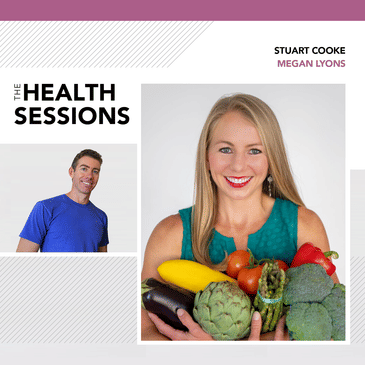
This week, I'm excited to welcome Megan Lyons to the podcast. She is a wellness expert and owner of The Lyons' Share Wellness. Megan is a Harvard graduate, board-certified holistic nutritionist and founder of The Lyons' Share Wellness, where she helps people achieve the healthiest and happiest selves. In this episode, we discuss adrenal dysfunction, the telltale signs, most common causes, and the path to follow when wanting to heal. Over to Megan.
Some questions asked during this episode:- Tell us about the importance of adrenal health?
- How can we best test the health of our adrenals?
- What are the tell-tale signs of adrenal dysfunction?
This week, I'm excited to welcome Megan Lyons to the podcast. Megan is a Harvard graduate, board-certified holistic nutritionist and founder of The Lyons' Share Wellness, where she helps people achieve the healthiest and happiest selves. In this episode, we discuss adrenal dysfunction, the telltale signs, most common causes, and the path to follow when wanting to heal. Over to Megan.
(01:13) Hey guys, this is Stu from 180 Nutrition, and I am delighted to welcome Megan Lyons to the podcast. Megan, good morning. How are you?
Megan
(01:22)
Good morning. It's good afternoon over here, but I am doing great and so excited to talk to you today.
Stu
(01:29)
Fantastic, fantastic. First up, for all of our listeners that may not be familiar with you or your work, I'd love it if you could just tell us a little bit about yourself, please.
Megan
(01:39)
Sure. Well, my name's Megan Lyons. I live in Dallas, Texas, and I own a business called Lyons' Share Wellness, where I like to describe it as I get my hands in as much possible related to wellness as I can possibly handle. I like to do a lot of one-to-one work with people. I have a podcast, I have group programs, I have a blog. I do speaking. I do everything I possibly can because this area of life really lights me up. I have so much passion around nutrition and wellness and just the ability that we all have to make ourselves feel much better and go enjoy life at a more full capacity.
[00:00:00] brought to you by 118nutrition.com.au Welcome to the Health Sessions podcast. Each episode we cut to the chase as we hang out with real people with real results. Hey, this is Stu from 118 Nutrition and welcome to another episode of The Health Sessions.
[00:00:29] It's here that we connect with the world's best experts in health, wellness and human performance in an attempt to cut through the confusion around what it actually takes to achieve a long-lasting health. I'm sure that's something that we all strive to have. I certainly do.
[00:00:43] Before we get into the show today, you might not know that we make products too. That's right, we're into whole food nutrition and have a range of superfoods and natural supplements
[00:00:52] to help support your day. If you are curious, want to find out more, just jump over to our website. That is 180nutrition.com.au and take a look. Okay, back to the show. This week, I'm excited to welcome Megan Lyons to the podcast. Megan is a Harvard graduate,
[00:01:11] board-certified holistic nutritionist and founder of the Lyons Share Wellness, where she helps people achieve their healthiest and happiest selves. In this episode we discuss adrenal dysfunction, the telltale signs, most common causes and the path to follow when wanting to heal. Over to Megan.
[00:01:29] Hey guys, this is Stu from 180 Nutrition and I am delighted to welcome Megan Lyons to the podcast. Megan, good morning. How are you? Good morning. It's good afternoon over here, but I am doing great and so excited to talk to you today. Fantastic. Fantastic. First up for
[00:01:52] all of our listeners that may not be familiar with you or your work. I'd love it if you could just tell us a little bit about yourself, please. Sure. Well, my name is Megan Lyons. I
[00:02:02] live in Dallas, Texas and I own a business called the Lyons Share Wellness where I like to describe it as I get my hands in as much possible related to wellness as I can possibly handle. I like to
[00:02:17] do a lot of one-to-one work with people. I have a podcast. I have group programs. I have a blog. Speaking. I do everything I possibly can because this area of life really lights me up. I have so
[00:02:33] much passion around nutrition and wellness and just the ability that we all have to make ourselves feel much better and go enjoy life at a more full capacity. Fantastic. Yeah, very rewarding as
[00:02:47] well. I would imagine as you start to see the results in people's lives genuinely change for the better, which is so valuable because so many of us I think are feeling less than optimal.
[00:03:00] Which is why this morning I really wanted to jump into the area of adrenal health because I think we've had a crazy three years. We're coming up to the backside of the year. So typically
[00:03:11] people are starting to feel the burn of a whole year of grind and also perhaps accelerating as we rush into the holiday period. So first and foremost, I'm interested then in your thoughts on
[00:03:26] the importance of adrenal health. Yes, well if you had 18 hours I could fully explain to you the importance of adrenal health but by way of being a little bit shorter than that, I'll say
[00:03:42] our adrenals basically control at least half of our bodily processes. Now for people who don't know what the adrenals are. These are small glands that sit on top of our kidneys and they are most
[00:03:54] famous, most well known for secreting cortisol which is one of our stress hormones. They also happen to secrete aldosterone and DHA and a bunch of other things but we're talking mostly about cortisol
[00:04:06] today. Cortisol is a stress hormone that rises when we feel stressed and lowers when we feel calm but it also has a role in inflammation which is a big buzzword these days because it's connected
[00:04:19] to so many chronic diseases. It plays a role in metabolism, literally how our body uses fat, carbohydrates and protein. It helps regulate our blood sugar and our blood pressure. It helps with our circadian rhythms and our sleep and wake cycles and over time when we have
[00:04:37] dysregulated cortisol over an extended period of time not just a stressful day but over months and years it's linked to a lot of very serious chronic conditions that all of us want
[00:04:51] to avoid. So the importance of adrenal health is just huge for the way that we feel and the way that we survive. And so I've been recording podcasts for many years now, well over a decade
[00:05:04] and back in the day around the time when gut health and leaky gut were kind of woo-woo terms there was the phrase adrenal fatigue as well and that was bunched into this very questionable
[00:05:18] phrase that got a lot of skepticism from the media in terms of it doesn't really exist. Like is this a real thing? What are your thoughts on that adrenal fatigue and if we
[00:05:31] are feeling tired and wide and burnout and just off how can we test? How can we test the health of our adrenals? Really great question and it's something that we're still dealing with today where if someone is very firmly rooted in western medicine and maybe they received their
[00:05:52] medical education and several decades ago they were told oh adrenal fatigue that's just hogwash don't pay attention to that these people are lying they're making something up they're just trying to get attention all of this kind of stuff. And so now even in my doctorate
[00:06:11] program they were very adamant about saying adrenal dysregulation not adrenal fatigue just as a way to distance ourselves from that term because adrenal fatigue as a as a phrase has been really thrown under the bus. Now a couple things happened to
[00:06:28] haven't lose credibility first the exact mechanism by which they thought adrenal fatigue was happening which is basically your adrenals just get tired and they stop secreting as much cortisol that's been disproven it's a really intricate and irrelevant difference but the the mechanism
[00:06:52] that they initially thought was responsible has been disproven. And then second what they thought was just people making things up or wanting to get attention turns out to be its own kind of global pandemic because this really is impacting so many people
[00:07:11] and they thought it was just like a trend like oh everyone's saying this but now we're starting to realize the physical repercussions of all of this and how it truly is a dysregulated process in our
[00:07:24] body. So that would lead to the second part of your question which is how we test it. In my opinion the best test is what's called a diurnal saliva test so diurnal means multiple times
[00:07:36] through the day usually it's four readings during the day you'll do it when you wake up then you'll do it sometime around noon sometime around five or six p.m and then right before bed and this
[00:07:49] is collected in saliva you can do it at home you need to order it through a practitioner almost always but you can collect the sample at home. The reason that we do it during
[00:08:00] the day is that our cortisol fluctuates so dramatically through the day and so if we just get one blood spot reading you get your blood drawn at 9 a.m or whatever first of all blood is less
[00:08:14] accurate than saliva for cortisol but second that's a point in time estimate that does not show the pattern and your cortisol might very well be normal at that blood draw at 9 a.m but then
[00:08:28] it's way out of range right before you go to bed or something like that so having those four points throughout the day helps us map the pattern and we can tell by that there's something called
[00:08:39] stage two adrenal dysregulation stage three we can kind of tell where people are being on their map throughout the day. Got it got it so much like the thyroid which can present symptoms that are so wide ranging that anybody that reads the list of symptoms
[00:08:56] the thyroid might think I've got a problem with thyroid. Is that similar from an adrenal dysfunction perspective what are the most common telltale signs that we might have an issue? You're exactly right a lot of these symptoms are common to so many people and my perspective is
[00:09:18] well that's probably because so many people have at least some semblance of adrenal dysregulation and however what we really want to look at is the symptoms that I'll talk about being persistent and impeding your quality of life so one thing that I'll say might be increased urination I'll
[00:09:35] talk about that in a second well don't just say to yourself oh my gosh I went to the bathroom an hour ago I must have adrenal dysregulation no we can over analyze this stuff into the
[00:09:46] ground and that doesn't help anyone but all that said some of the more common signals of that stage two adrenal dysregulation which is the first stage one is like a flashing indicator that's not really something we consider stage two is the first real stage of dysregulation and
[00:10:05] they call this the wired but tired so your wired meaning your heart rate's going a little faster you might notice if you have an oar ring or a whoop or something else that trend is really
[00:10:16] drastically increasing over the course of months not just a day here and there but higher heart rate higher blood pressure higher blood sugar if you're measuring any of these things oftentimes people have menstrual irregularities so they're missing periods or they're having more frequent periods
[00:10:36] they're having trouble sleeping very commonly I see people in this stage wake up around 3am because there's some theory that we have a natural small bump and cortisol around that 3am time and if
[00:10:49] it's dysregulated that bump is enough to wake you up so waking up in the middle of the night feeling like I'm ready to go my mind is just roaring I'm ready to clock into work or whatever
[00:11:02] sometimes we'll have sweating or urination or thirst issues so electrolyte and fluid balance is you might feel irritable you might feel jittery you might have more caffeine cravings it's really that phrase why are you tired that I said that's how you would feel you're going on
[00:11:20] high speed all the time and then most people that feels uncomfortable enough to where they make some changes for the better which is great if we don't if we ignore that over a long period
[00:11:32] of time we can go into stage three which I call the crash and burn stage this is like it is so hard to get out of bed you feel lethargic you almost lose some of your passion and vitality
[00:11:45] for life you might have everything slow so constipation your digestive system is slow your hair growth is slow everything is just slower in that stage three okay and from a perspective then of wanting to make change I'm thinking about conventional medicine
[00:12:08] versus functional medicine and I don't know what your thoughts on this are but I know that obviously functional medicine seems to be much more in alignment with things that are happening right here and now whereas conventional medicine perhaps it could be more in the traditional camp
[00:12:26] less integrative perhaps would you how do you know where to go like if you're feeling like this and and and perhaps you've got a test off your own back but where would you go
[00:12:35] would you go to your doctor first or would you seek out perhaps more of a functional approach but I think I'm by I know I'm biased in answering this question because all of my training is
[00:12:47] functional medicine based and holistic nutrition based so I would definitely tell you start with a functional medicine practitioner because if you do get someone who's super western medicine they might if you're lucky check your blood cortisol which is that one point in time
[00:13:05] and it might be normal and then they say you're making this up I had that happen to me and I tried to demand saliva or urine tests and I even got them in some cases and they told me well
[00:13:20] this one time I was told this test is irrelevant because you produce too much urine and I said well that's the symptom of what I think I might be dealing with it's a vicious cycle
[00:13:30] and it's frustrating so I would start with a functional medicine practitioner if you feel like your problem is too deep for you to dig yourself out of I will also say for people listening who
[00:13:43] think oh my goodness I've been stressed for a long time I kind of start to recognize those symptoms they're not quote that bad yet but I don't want to get there the answer really lies within us
[00:13:58] and I hate that the answer is not doing more because if I can do anything for my health I will if I can eat this food if I can do this meditation practice if I can whatever I'm a doer I like to do
[00:14:14] but the answer with adrenal dysregulation is often doing less and slowing down and really figuring out the root of what is stressing you out and that deep slow work is a lot
[00:14:25] harder for someone like me but I'm saying that to tell people listening you might just start with yourself you might not eat even need if you're not too deep into this you might not even need a
[00:14:38] practitioner to guide you through it okay interesting yeah I have experienced adrenal dysfunction many many many years ago and I just got a few things wrong so I adopted a high intensity training protocol with so much vigor that I didn't have enough time
[00:14:57] for recovery and at the same time I was experimenting with a low carbohydrate diet so really taking the fuel away and things just went wrong my my cortisol levels were 10 times higher than they
[00:15:10] should have been at at nine nine o'clock in the in the evening so I just felt like I'd come out of a boardroom and I was just sitting in front of the tv watching a movie and so I've been through
[00:15:23] lots of learnings and fixed myself and know where to know what the black spots are in terms of things to avoid and and areas to be aware of what might Joe public be doing unknowingly that could be problematic for cortisol dysregulation down the line
[00:15:48] yes well I'd love for you to chime in with your experience as I go through some of these I'll list a couple of categories and they're all related to stress but stress comes in the form of mental stress physical stress chemical stress emotional stress all of these stressors
[00:16:05] so just mental stress wise I like to think of myself as I could robot through the day operating at super power efficiency never taking a break always eating meals in front of my computer and then poof
[00:16:19] I just flipped the switch and I would fall asleep and I would often fall asleep because I was so exhausted that I needed to fall asleep but that is not the way to treat your body very well
[00:16:31] that is a fast track to adrenal dysfunction so we need breaks during the day and I'm under no pretenses that people are going to do eight hours of yoga per day or anything like that but we need little
[00:16:43] breaks away from our computer we need time in nature every once in a while we need to breathe we need to eat we need to be in communion with other humans so that first mental stress if
[00:16:56] you're just trying to power through the day without any break at all that's one thing you might be doing the second you said is exercise exercise is like a goldilocks effect for adrenals where
[00:17:08] too little exercise is not good for your adrenals and too much exercise without recovery is not good for your adrenals so I'm like you I love it I love burpees I love half iron man's and racing
[00:17:25] and all of this kind of stuff but if I did that when I did that without recovering and while under an extreme amount of mental stress and probably under feeling myself knowing what I know now
[00:17:37] that altogether is a recipe for adrenal disaster so if you're like us and you love that intense exercise just know that the cumulative burden that your body's feeling of all these stressors it all goes into the same bucket so if you're pushing the level with exercise you've
[00:17:56] got to give a little more in terms of recovery or sleep or feeling well or something like that you also said low carbohydrate I think a low carb diet is an excellent strategy for a lot of people
[00:18:09] but not if you're in adrenal dysfunction and you're burning the candle at both ends and not getting enough sleep and over exercising and all this stuff our bodies really need fuel so oftentimes with the high achievers that I see who are experiencing adrenal dysfunction I'll tell them
[00:18:28] to slow down their exercise and just incorporate some walking and they give me big eye rolls and they think that's not exercise that has I'm going to gain weight and then I'll say incorporate a few more carbohydrates like whole healthy carbohydrates and they're like oh I'm
[00:18:45] going to feel terrible I'm going to gain weight and then a couple months later they'll come back and they'll be like I feel better I lost weight imagine that because our bodies really do know the answer
[00:18:58] and and a low carbohydrate under nutrition under nourished diet is a stressor on your body so then last there are things like toxins that we breathe and toxins in our homes and all of
[00:19:10] that kind of stuff and to some extent that's unchangeable like I can't change the the air in Dallas here where I live but if I'm putting things on my body or I have things in my home
[00:19:24] I can definitely change my toxic exposure so that was mental stress nutrition exercise and chemical or toxic stress yeah fantastic and it's so hard when you are a person that
[00:19:37] I speak to myself I just like to move and I like to do stuff and I can't sit around and it it it crossed me too I I switched crossfit for yoga and just embraced carbohydrates like never before sweet potatoes and things like that I
[00:19:58] I dialed into some adaptogens like ashwagandha rodeola I took phosphatidil serine in the evening and worked on some it did some breath work and things like that and that it took a while it took
[00:20:13] a while but it came good and now I'm very mindful that there is this framework that just needs a little bit of support if I'm going to be the type of person that I am I just need to make
[00:20:25] sure that I'm recovering properly I'm fueling properly and I'm I'm nourished appropriately as well but so I guess I was going to ask then how important then from your perspective is diet and exercise as perhaps two of the fundamental pillars for adrenal recovery I think they're
[00:20:47] very important and this is why the protocol is customized for every person there are some great books out there and things like that that you can read on your own but when I'm working with
[00:20:57] people individually it's customized based on the person maybe someone travels for work and they love their job but they're not going to be able to home cook meals because they're on the road Monday through Thursday well then I'm really going to lean into the breath work and the
[00:21:14] exercise reducing that exercise and doing some more restorative and I'm just going to guide them as much as I can on diet but let that go a little bit or vice versa let's say someone they
[00:21:27] really love their job but their job they're a lawyer and they're in trial right now so their job is really tough I'm going to dial in their nutrition and their exercise to the nth degree I'm really
[00:21:42] going to focus on that we don't have to be perfect in all four areas but we do have to figure out where we can give a little so as a nutritionist I feel like diet is one of the most
[00:21:55] powerful but again I recognize my bias in that I really think wherever we can give back to our bodies it's going to help definitely so how about how about mindset because that one's tricky
[00:22:07] so it's kind of easy to switch up your diet and and if you're told that you need to walk instead of crazy hit training or boot camps in the morning you can do that but if you're told to change the
[00:22:19] way you think it's really hard especially if you're somebody that isn't into meditation just can't do it has a monkey mind the 24 seven rumination all of the above what might you recommend in
[00:22:34] order to try and dial into a healthy mind a mindset that can be useful in tackling not only adrenal dysregulation but everyday life from a stress-free perspective yes I wish I had a
[00:22:52] super simple three step solution to this and I don't I'll be honest and say it is hard and I think the hard is what makes it worth it if it were easy we all would have done it before
[00:23:04] and those people who can meditate very well they don't have any thoughts they just sit down and it's easy or that don't experience adrenal dysregulation and they're gifted in this area
[00:23:17] which it sounds like you and I know for sure myself we are not gifted in this area but that's okay there are strengths and and other challenges for every single human so for someone like me where
[00:23:29] I said exactly what you said I have the monkey mind I can't meditate it doesn't feel good someone eventually said to me hey man that actually means you need it more and they gave it
[00:23:40] to me like the example of a bicep curl if you just go to the gym and you do one bicep curl you're not going to get strong but if you go in there day after day week after week and you're
[00:23:51] doing multiple bicep curls you're going to get strong now someone like a monk I envision sitting down on their mat meditating they're only doing one bicep curl because their mind only veers off
[00:24:02] one time and then they redirect it and the rest of the time they're just sitting there and piece that's amazing for them but for me I'm doing a lot of bicep curls because I sit there and I think
[00:24:12] oh did I send the email okay Megan come back to your breath oh my gosh the meeting later today come back to your breath did I defrost the chicken come back to your breath and every single one
[00:24:21] of those is like a bicep curl so instead of thinking which I used to think oh you're bad at meditation now I think yes every time you do that you're getting stronger and in the same way for me
[00:24:36] I said a lot of this was doing less I tried to incorporate or embody the concept of joe mo you might have heard of fomo fear of missing out I used for myself joy of missing out so
[00:24:50] every time I say no to something I say yes I'm so proud of you for prioritizing yourself every time I intentionally prioritize sleep instead of working more or I say no to an extra
[00:25:04] obligation that's not serving me right now I celebrate that I try to give my brain the dopamine it needs because my reward system is naturally wired the other way where I would get dopamine
[00:25:17] only from doing more so these little strategies like this can help but at the end of the day the answer for each person is different for me what might be stressing me out what is often
[00:25:30] stressing me out is I love my work and I just want to do more and more and more and more and more and that's a positive amazing fortunate place to be stressed but that is what stresses me out
[00:25:42] for someone else it might be that they lack confidence or that they whatever you fill in the blank getting to the root of whatever it is that stressing you out will help you create that
[00:25:54] path forward but it's not easy yeah it's no it's not easy at all it's um but I love the analogy of the gym because you're exactly right it is the brain is a muscle the mind is a muscle and
[00:26:07] needs to be conditioned appropriately otherwise it is going not was just not going to be as vital and as useful as it needs to be so do you um do you build meditation or a meditation style
[00:26:18] practice into your day to use any tech to do that or or perhaps just some traditional principles or practices yes well I think it will uh maybe sound just like my personality
[00:26:32] and and I'll tell you a story about this but I'm now on a streak of meditation that's like 1400 days or something like that it's a really long time well over like three years but
[00:26:45] when I got to day 999 I remember very clearly I was like I should skip tomorrow and the reason is I don't want meditation to become something that I'm doing just to check the box and fuel that
[00:27:01] drive in me that's the doer that's the accomplisher in the end I did not bring myself to skip the day I continued it but I only give that caveat to say there's a risk in people like
[00:27:14] me of of using meditation not the way it's meant just to say check the box I did it for the day yes and move on and you don't get benefit for me though the best time to do it is the morning
[00:27:27] I do tend to wake up I have that strong cortisol awakening response so I'm ready to go through the day and I like to calm myself down a little bit more I exercise in the morning but I
[00:27:40] do my meditation first and other aspects of my morning routine I don't even really have to think about it it's just I mean my dogs know to lay down right in the right spot it's so part of my
[00:27:54] routine that I genuinely look forward to it and some days it feels very aligned and some days it doesn't that's okay but I don't judge myself I do use the muse headband have you heard of that one
[00:28:05] I have yeah I have a muse headband oh great yeah I really like it I think technology I aspire to be one of those people who just meditates without any technology but for me I really appreciate the
[00:28:22] feedback of they're like for me their bird's chirping if I am in a calm state there might be ocean waves or thunder if my mind is more active I really like that feedback and then of course I'm
[00:28:38] wearing other devices as well I monitor my heart rate through that but that's my tech of choice fantastic yeah tech is a hard one as well especially when you're a particular personality because I
[00:28:49] wear the aura ring and I had a I had a notification from aura this morning that you've been wearing your aura ring and tracking sleep for four and a half years now and and I have been I've been thinking
[00:29:01] that maybe I'm going to take the aura ring off now because I wake up in the morning and I just want to check my sleep score and I want to check my stats and I'm thinking I just don't know
[00:29:11] is that right should I be doing that and I kind of feel like I should know now I know where they've had a good night sleep I know what my resting heart rate is my HRV like all of these
[00:29:20] stats but I'm still jumping for the phone first thing to check the stats so I don't know interesting but I I guess if tech makes us do what we need to do then it's probably better to use tech than to
[00:29:37] try try without yes again I don't have a magic solution but I used to wear a continuous glucose monitor and I experienced that same thing where honestly it was truly helpful for me for the
[00:29:50] first little bit but after having it on for so long I thought I know the foods that are going to spike my blood sugar for sure I know the foods that are great for my blood sugar and on the off chance
[00:30:03] that something surprises me I have a stressful day and my response is higher whatever the only outcome is that's going to stress me out yeah so while I fully advocate that technology at the beginning
[00:30:16] there is a time and a place to break up with it I had to cut myself off of the cgm and I still find benefit out of the aura but I don't know if this will help you I do a brief journaling practice
[00:30:31] and my meditation before I check my aura ring no matter what so I check in with myself as the number one data point before I check in with my aura ring otherwise I would let that stress me out
[00:30:46] or dictate my day and even though it's cool technology I think my body's cooler technology yeah exactly right just on that topic of cgm and also I think the importance of understanding the foods that best serve you in terms of keeping your blood sugar
[00:31:05] super stable and being as nourishing as possible as well did you have any unexpected results with some of the foods perhaps that you thought were serving you that weren't actually when you looked at
[00:31:17] the cgm results yes I will answer your specific question but first I'll say as someone with previous adrenal dysfunction my number one surprise was still how stress impacted my blood sugar beyond any food that I have ever eaten wearing my cgm the stressful moments had higher
[00:31:41] spikes so seeing that in the data for me helped me be even more in tune with my body and responsible about managing my my stress levels a couple things that were surprising for me I think the most
[00:31:56] surprising now these days I feel like this is everywhere but I didn't realize at the time that grapes in particular were fruit that spiked my blood sugar very tremendously so just having a
[00:32:10] bunch of grapes on an empty stomach for me it wasn't the best option now even with that I had to go through a little process of saying to myself okay so maybe Megan you're not gonna have grapes
[00:32:22] every afternoon you don't want the spike in the crash but are grapes really an evil food no I got into a great phase there where I was like oh even blueberries well that gives me up like
[00:32:33] five points or something but that's a normal response fruit is a wonderful food I don't think we should be eating 50 servings of fruit per day but vegetables have some sugar a lot of whole
[00:32:46] natural things have sugar and a little bit of a glycemic response is normal but to answer your question I think the grapes were the most surprising there was also a an erythritol based macha latte
[00:33:00] that I used to drink like a powder and even though it quote shouldn't by regular standards that did give me a much bigger spike than I anticipated I think the most pleasant spike for me which now
[00:33:15] in hindsight I understand but chocolate is one of my favorite foods and that gave me no spike at all like very good quality low sugar dark organic chocolate and that was just flat line
[00:33:29] and so that validated my desire for chocolate that's dangerous information I know it really was that's right that's excellent um so so talk to me then about supplementation if we are in a position
[00:33:45] where we need to fix some things as quickly as possible are there any baseline supplements that are always your go-to that always deliver the desired results always is a really strong word
[00:33:59] with supplement so I'll say most of the time okay my number one go-to is going to be magnesium speaking of chocolate cravings chocolate's rich in magnesium but magnesium gets burned through so quickly with stress yeah and so people who are taxing their adrenals even if they're eating
[00:34:17] a healthy diet magnesium is found in things like leafy greens and all kinds of healthy foods but the quality of our soil just isn't very rich in magnesium anymore so I would almost always start someone on a magnesium supplement for adrenal dysregulation I like magnesium l3 and 8 because
[00:34:37] it crosses the blood brain barrier but lots of different formats of magnesium can be helpful I think there's a safety net in terms of like vitamin D which is actually associated with adrenal dysregulation so making sure that you're covered on all your nutrient bases omega 3s as
[00:34:58] well and then if we're going to go to the next step you named two of my favorite categories one is adaptogen so adaptogens are fantastic ashwagandha was one that you mentioned ashwagandha tends to be
[00:35:14] an energy balancer so for some people it can bring them up in energy which might not be what they want and for some people it can bring them down usually it gets you to that neutral level
[00:35:25] but for some people for many people I'll start with maybe even a more gentle one like holy basil which is also called telsi or something that's very soothing maybe a rhodiola something like that and then you also mentioned phosphatidylsirin there's a supplement that I love I have no
[00:35:46] affiliation with the company called cortisol manager which is a blend of ashwagandha phosphatidylsirin altheanine and I think magnolia and that is a really great blend for a lot of people phosphatidylsirin helps the brain not over respond to stress and can help for people
[00:36:06] who have dysregulated sleep patterns or things like that based on their dreamals can help them calm down for sleep yeah I was gonna say boy I could repackage that with a sleep label and I think that would work a dream yes absolutely it's one of those borderline
[00:36:23] like it's so powerful should this be regulated but no it's really uh it's it's not dangerous and I would cautiously recommend it you want to be careful with any supplement so definitely talk to your practitioner if you're listening but I would cautiously recommend that to everyone who
[00:36:41] relates to this adrenal conversation yeah it sounds like a very useful concoction on so so supplements then to nutrition and nutrition is an area much like religion or politics that can really inflame people and become quite stressful in its own right and I think because we're now
[00:37:00] at a stage where there is still no clear and hard line in the sand as the best diet for human health plant-based veganism all the way through to animal-based carnivore and everything in between yes devout followers but still much confusion and I'm interested to hear your perspective
[00:37:28] in terms of nourishing the body in the most in the least stressful way where do you sit in terms of nutrition what type of dietary intervention do you call upon as perhaps
[00:37:44] the most beneficial in your in your rats in your eyes yes so I will say I don't only work with adrenal dysregulated clients and in my practice over the years I have recommended the vegan diet
[00:38:01] for a small handful of people I've never recommended all the way carnivore but I've definitely recommended a much more keto centric uh uh payload hardcore paleo for a small handful of people
[00:38:16] for most people in the middle though I really do believe any of these diets are over complicating it that if it's whole food and we eat it in balance that it's probably better than some
[00:38:31] kind of packaged food that just has a diet company's label on it the whole food is almost always better I also remind people there are three macro nutrients and macro nutrient means stuff that's
[00:38:45] good for us nutrients that we need in big quantities macro so carbs protein and fat I really do believe that we need all of those in balanced quantities and this becomes even more important if you're dealing with adrenal dysfunction so for someone who has super functioning adrenals
[00:39:06] they're great they're managing stress great but they're looking to drop some weight and they don't do a lot of exercise maybe I'll I'll taper back on the carbohydrates for them maybe even on the fat
[00:39:20] for them depending on the person but for someone with adrenal dysfunction I know we need a solid quantity of carbohydrates protein and fat and skimping on any of those is a stressor for the body
[00:39:34] your body can make macro nutrients out of each other but that's a stressful process so really just giving it at each meal a source of whole foods carbohydrates a source of protein a source of healthy fat that's the best approach for someone who's dealing with struggling adrenals yeah
[00:39:52] that sounds good and you mentioned the three macro nutrients and I've heard talk of a fourth macro nutrient which is alcohol often often referred to as the fourth so for somebody that
[00:40:05] is adrenally challenged but really likes that glass of wine at the end of the night to wine down what would your thought suggestions be from that perspective because I know that alcohol can
[00:40:17] seem to be so calming but from an underlying health perspective it can do very different things than I think we perhaps might expect that's exactly right I never as much as I can avoid it I don't
[00:40:32] like to draw hard lines in the sand so saying you can never have alcohol again for the rest of your life of course if the person's dealing with it an adverse mental relationship with alcohol
[00:40:43] that might be appropriate but in terms of the adrenals I like to not have hard lines in the sand because people tend to be like me where they can take it and they can stress about it and they
[00:40:54] can go the extra mile that said things like alcohol even things like caffeine things like sugar all those that give us comfort when our adrenals are struggling those are really detrimental
[00:41:08] to recovery so what I like to do is educate my clients about how the body has to process alcohol and how when your liver is processing alcohol your normal metabolic functions basically turn off
[00:41:21] your body is in a stressed out state trying to get the toxin out of your body that causes a strain on your adrenals which are the ones who who produce cortisol and basically slows down
[00:41:34] your recovery a little bit and once they hear that then they start thinking oh is it actually worth it and then I start helping them think of other things that can help them relax so maybe it's a
[00:41:48] there's a sparkling water with some magnesium in it that I really like or maybe it's a mug of tea or maybe it's they get in the habit of walking after dinner for 10 minutes or
[00:41:59] they have a cat or a dog and they really intentionally snuggle and get that oxytocin or they do a crossword puzzle or they stretch it doesn't really matter but finding something else to give them that soothing effect can really help and then honestly putting it in their hands
[00:42:18] because I believe like I said there's no absolute so if you feel I know this is not the best decision for me but right now all I want is that glass of wine give yourself some grace of course
[00:42:30] do it safely and do it sporadically but it's not the end of the world if one day you do too hard of a workout or one day you have a glass of wine or one day you have too much sugar it's really
[00:42:42] that overall supportive pattern that we want to get going in the right direction yeah no it's interesting I don't drink and haven't had a drink for many years made perhaps three years
[00:42:57] but when I did the last time that I actually did the results that came through on my aura ring were nothing short of shocking boy oh boy every single thing tanked and it was just so surprising
[00:43:12] and it knocked me out for days afterwards I just felt like a train wreck so it's it is uh yeah that's that's perhaps one of the positives for me I think of tracking stuff on
[00:43:21] the aura ring I can kind of see the stuff but but but saying that I didn't need to see any data because I felt like a train wreck anyway so I just don't bother anymore and when you get to that
[00:43:33] point where your body's so healthy that putting toxins in it truly feels bad that's such a gift to yourself because now you don't have to wait enough color it's not like you're fighting every
[00:43:44] night saying I really want that wine no you can't have it it's like no I don't want to feel bad I don't I don't want that in my life the decision becomes much easier yes absolutely right so um
[00:43:56] so we're kind of coming up to the the end of the conversation but I'm just keen to ask you about perhaps some of your um some of your top tricks tips strategies or techniques perhaps three
[00:44:11] that could make the biggest impact on our overall health it doesn't have to be adrenal related it could be anything from food nutrition mindset um whatever they may be what do you think those
[00:44:23] low hanging um low hanging fruit would be perhaps then amazing I will start with one which we almost briefly touched on which is the morning routine yeah I find that everyone these days leans over in
[00:44:40] bed they check their phone even if they're not checking the email they're checking news or social media or something and their brain is going a million miles an hour on what the world needs
[00:44:52] or some kind of catastrophe or something that we don't want to start our day with so I encourage people even just take five minutes before you check your phone to do something and it doesn't have to look
[00:45:04] like what I do but anything that's just you checking in with yourself for five minutes only before you dive into what the world needs from you that is enough to meaningfully alter the
[00:45:16] course of your day and I would even say you're like yeah it's my favorite health habit for sure that I've done you agree I absolutely agree um yeah it's you can be taken off into a trajectory of
[00:45:29] of just a spiral of news and social media and opinions and love and hate and war and and you probably don't need that upon waking yes absolutely so that would be my number one yeah I think
[00:45:46] number two uh we also touched on just briefly which is getting back to whole foods really matter so very frequently I'll have conversations with people who are coming into my program and they'll
[00:46:00] say oh yeah I eat vegetables and then I'll just say okay for a week put a tally mark on this posted note for every serving of vegetables you eat and they'll come back and they'll have like
[00:46:11] two tallies for the week or something like that and I'm like okay well that's great too is better than zero but oftentimes we think we're eating healthily because we ate a protein bar instead of the the
[00:46:25] fast food burger or something like that and we're still missing the abundance of actual whole foods so I'm encouraging people to go for multiple servings of vegetables per day in fact I suggest just to give people something to aspire to eight servings of vegetables per day
[00:46:45] and working your way up to that even if it's not that it's whole foods if it if it was living breathing growing something on the earth originally then it's a great thing for us to eat so more
[00:46:59] whole foods less packaged foods and then ooh three this is like choosing your favorite child I will have to say for the third one I think most people these days are when they're trying to cut back or they're trying to change body composition or they're
[00:47:22] trying to get results or whatever they tend to be skimping on the protein especially at breakfast so I like to say to people everyone needs breakfast it doesn't matter what time it is if it's 6 a.m. or 1 p.m.
[00:47:37] if you're breaking your fast that's breakfast and I find that that meal having a good solid amount of protein is really good for your blood sugar for the rest of the day for your cortisol
[00:47:49] which we talked about for your cravings for your energy all of that so focus on the protein at your first meal today great great advice I couldn't agree more hingo fantastic look great conversation so much
[00:48:04] knowledge there what's what's next for you what have you got in the pipeline no we're coming up to the backside of the year but you look like such a busy person with so many things going on
[00:48:15] tell us tell us what the next six months will bring well the next few months I am so excited to say we'll just be more of the same because I genuinely love the place that I found myself in right now
[00:48:30] I see a lot of clients during the week I'm a lifelong learner so even after several masters degrees and board certifications and whatever I'm doing a doctorate right now so there will be
[00:48:42] more doctorate in my near future there will be more podcasting there will be more of just everything that I'm doing right now I'm also in a super fun time of life personally I have eight nephews and
[00:48:56] nieces and several of them are little right now so lots of time with them I'm traveling next week to Europe and Africa so just lots of fun stuff in the future but from an outsider's
[00:49:10] perspective more of the same that's fantastic so for all of our listeners then that want to get more of you listen to your podcasts and just dive into the information and resources that you have
[00:49:20] where can we send them absolutely so my website is www.thelionshare.org it's lyonshare.org I have lots of blog posts and free information on there I do a podcast weekly called wellness your
[00:49:38] way and I'm most active social media wise on Instagram which is at the lion's share fantastic Megan thank you so much we'll put everything that we've spoken about today including all of the
[00:49:49] links in the show notes and I look forward to showing this to our audience because there's such valuable information and hopefully we can send some traffic your way and and my biggest
[00:50:00] wish is to prompt curiosity with our followers so they can dive in and make change in their own lives so thank you so much I really appreciate your time today thank you it's been a lot of fun
[00:50:21] thanks for listening to our show the health sessions if you would like more information on anything health from our blog free ebook or podcasts simply visit www.180nutrition.com.au also if you have any questions or topics you'd like us to see covered in future episodes
[00:50:39] we would really love to hear from you simply drop us an email to info at www.180nutrition.com.au and if you listen to us through iTunes and enjoy the show we really appreciate a review in the review section so until the next time wherever you are
[00:50:52] in the world have a fantastic week